Celebrating Green
by Wendy Priesnitz
The various holidays – like Easter, Christmas, Valentine's Day, and Halloween, as well as birthdays – have traditionally been important times in the life of many families. These occasions are great opportunities for sharing the principles behind our lifestyles and beliefs with others, especially with young children. But if your extended families and friends aren’t as environmentally or socially aware as you are, the commercial hype surrounding these occasions can be troublesome. For many, they are just another commercial opportunity, benefiting greeting card and candy manufacturers, and often become orgies of excess packaging and unhealthy eating, tempting some to try to ignore them altogether. But there are ways to enjoy these times with our families and friends, but not forsake healthy living and our eco-ethics.
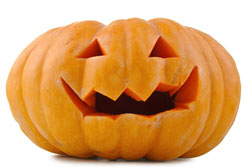 Halloween Halloween
Although Halloween doesn’t pose a gift problem, it does have its own billion dollar consumption issues, as families spend big on costumes and candy. Aside from the stomachaches and headaches resulting from all that sugar, Halloween can result in a huge pile of discarded candy wrappers, goodie bags, plastic pumpkins, masks, and costumes. Halloween costumes are hugely influenced by commercial media, with fads often being driven by television shows and movies. So families might find this a good place to inject some media literacy into their discussions.
Rather than buy a new costume you (or your child) will only wear once and throw away, why not make one out of clothes and fabrics you already have? You can also create costumes from items purchased at thrift shops and yard sales. Or swap costumes with neighbors and friends. And if you can’t escape purchasing an off-the-rack version, at least donate it to your local daycare center or shelter after the big night.
Plastic goodie bags are totally unnecessary. Your kids can collect their candy in reusable buckets, wicker baskets, canvas bags, or pillowcases. When you're buying treats to give out at your door, choose items that come in a minimum amount of packaging. Or skip the candy altogether in favor of useable treats like pencils, pens, magnets, erasers, or other trinkets (but keep them useful or else you’ll defeat the purpose.)
If you’re having an adult or mixed-age Halloween party, serve healthy and seasonal foods. Make good use of the pumpkin theme, not just in decorations but in food too, even after the event is over. After you’ve carved a face into the pumpkin, dry and spice the seeds for nutritious snacks. The tender insides can be pureed for soups, mashed for pies or spiced up for a main vegetarian entrée, such as an Indian curry or pumpkin chili. And don’t forget to purchase your pumpkin at a farmers’ market or local farm stand in order to minimize its “food miles” and support your local producers.
 Christmas Christmas
Here are some ways to save money and protect the planet while still spreading Christmas cheer.
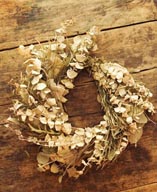
Give yourself and the environment a break this Christmas. Leave all those fragile and fiddly, dust-attracting, energy-guzzling decorations in the basement, sell them at a garage sale, or donate them to a charity. You don’t have to go overboard with the picture-perfect decorations in order to enjoy the spirit of the season. Decorate with kids’ art, a few cherished heirlooms, and some colorful fruit and greenery. If you must have a tree, buy a potted one and plan to grow it in your garden next year. Try to locate an organically grown one if you can’t change the cut tree tradition. Or rescue a downed deciduous branch and put it in a stand; your decorations will be the star of the show!
Do you enjoy holiday baking but don’t have a lot of time? Host a cookie swap among your friends and neighbors, where each of you makes a few dozen of one kind of cookie and gets together over a coffee or glass of wine (organic, of course) to share them among yourselves. This way each person has a great cookie assortment without all the work.
The gift-giving tradition can be one of the mostly costly, stressful, and environmentally unfriendly aspect of Christmas or any other celebration. And it’s one that many people would like to change. In fact, in a survey conducted on behalf of World Vision, 84 percent said they would rather have a holiday gift given to a charity in their name than receive more socks or sweaters.
Consider having a “Buy Nothing Christmas.” That’s the name of an initiative started by a Mennonite group in Manitoba. Co-founder Aiden Enns modeled the idea on Adbusters magazine's Buy Nothing Day campaign. “What a shame that it’s only one day, I thought,” says Enns. So he decided to inject a spirit of radical simplicity into the whole Christmas season…and Buy Nothing Christmas was born.
It’s not that Enns and his group are against giving things at Christmas. “Gift-giving is important,” he says. “It’s a profound action, an important glue that keeps communities strong, people less individualistic. But this gift-giving impulse has been exploited by consumer capitalism and a market that preys upon our appetite for wasteful gadgets and soon-obsolete fashions.” Gift-giving shows affection, thoughtfulness and love, he says. “While gift-giving is a good thing to do at Christmas, that doesn’t mean we have to go overboard.”
So the solution is to give a personal gift. That could involve giving someone a gift of your own artwork, a collection of meaningful photos, a collection of favorite family recipes, a shared trip to a movie, a coupon for babysitting to new parents, or a charitable donation in the giftee’s name.
And definitely make your own gifts. One of the advantages is that you lessen or eliminate the time spent at the mall. Use that time together with your family and friends instead. Host a potluck meal during the holiday season. Keep it simple for everyone but make getting together a priority. Invite some other families for a walk in the park or for a sledding party. Spend an evening by candlelight just telling family stories – all electronic media gets unplugged!
When you do buy things, remember principles like buying locally-produced, fairly-traded products with environmentally friendly or no packaging. Recycling or re-using is also a good principle to keep in mind when considering Christmas gifts. Any way you do it, you can challenge our over-consumptive lifestyle and how it affects global disparities and the earth.
Instead of buying wrapping paper, make your own from recycled materials. Consider using children’s artwork as wrapping paper. Or reuse old paper, like the Sunday comics section, old maps, and decorated paper grocery bags. Or wrap a gift in a colorful piece of scrap fabric or make the wrapping part of the gift...as in encasing a sushi bowl and chopsticks in a tea towel, or some bathroom soap in a plush bath towel.
Families we know are increasingly downgrading the importance of Christmas in favor of a more natural solstice celebration. The winter solstice, also known as midwinter, marks the day with the shortest period of daylight and the longest night of the year. The term solstice means “sun stands still” and, indeed, this is a time when the sun appears to halt in its apparent journey across the sky. Since winter is the season of darkness and bad weather in cold climates, the coming of longer and brighter days after the winter solstice has traditionally inspired festivities, some of which have been adopted for our Christmas celebrations.

Birthday Parties
The birthday party should be an occasion for nurturing an appreciation for life, friends and family...and to celebrate another year of growing. However, it can easily become a mini ecological and health disaster.
So you can begin to turn that around by starting with the invitations. Your family can craft them from their own handmade paper, or simply recycle cards or paper you’ve saved from other occasions. Or you could use email or phone to invite people. Keeping the invitation list small will make this process easier and make the group intimate enough that you can chat with each parent about your wishes regarding gifts and food, while minimizing the chaos that parties can create.
Decorations can be one of the most wasteful aspects of any party, especially balloons. Once discarded or lost, they can accumulate, along with other plastic debris, in an animal’s or fish’s stomach and intestines, often blocking the passage of food and causing the animal to starve to death. The ribbons and strings attached to balloons have been found wrapped around the necks and beaks of shorebirds, also causing starvation. As an alternative, cut small streamers from old sheets or fabric scraps and hang them where they will dance in the breeze.
Decorate larger pieces of cloth with fabric paints and use them as table cloths and napkins. You can personalize them for the occasion and reuse them for future celebrations, accumulating an ongoing record of the child’s parties.
And, of course, it should go without saying to use reusable dishes and utensils. Thrift shops and flea markets are a good source of inexpensive dishes; colorfully mismatched ones will add to the party atmosphere.
You can also dispense with party favors, especially if the children are small and haven’t yet been exposed to other, more commercial birthdays. If you think they will be missed, replace plastic trinket-filled paper goody bags with cloth bags stitched from old fabric and filled with bean bags, wooden toys, pencils and notepads, or flower bulbs. Or make the favors part of the fun by staging a craft activity. Kids might enjoy painting tiny wicker baskets to take home, creating something from homemade play dough, or making tie dye t-shirts or bird feeders from pine cones covered in peanut butter and bird seed.
A themed party can sometimes take care of the health and ecological issues all by itself. Why not arrange an outing to a local pick-your-own farm or a field walk in a local park focusing on learning about wild plants? Or make the environment the theme with a party where everybody wears green and brings something ecologically friendly, and where the food is proudly organic and locally sourced. Or hold a fairy tale party where everyone dresses like their favorite character and contributes to the adoption of a relevant zoo animal in lieu of gifts. A puppy-themed party might benefit an animal shelter and have relevant snacks and decorations. An old-fashioned party could involve making hand-cranked ice cream and having bowls of soap suds for blowing bubbles.
Gift can be a huge problem at children’s birthdays. Grandparents and other close relatives can be encouraged to give books or consumables like scent-free markers, play dough, or art supplies. Memberships to a children’s museum, art gallery, or zoo are other great choices; people can pool their funds if the membership is expensive. Magazine subscriptions and gifts of time – a fishing trip or day at the park – are other possibilities.
Ask party guests to bring an item of outgrown clothing or a gently used book or toy. These could then be donated to a shelter or relief organization. Or specify that they bring something they have created themselves, such as artwork or craft items, poems they have written, compilations of favorite jokes, recipes or songs on a CD, or a plant they’ve grown from seed. Afterwards, written material and artwork can be bound into a book to remind your child about the party.
If gifts are to be part of the birthday party, specify that they arrive unwrapped or enclosed in something non-commercial like newspaper cartoons or fabric. One family we know created a personalized gift wrapper for each family member, using scraps of cloth sewn together as patchwork. They were reused year after year and became a record of each person’s history as birthday and holiday events were embroidered on them marking things like “First Bicycle,” “Sweet Sixteen,” and so on.
 Easter Easter
Easter is the most important religious feast of the Christian year. But as with many other Christian events, the celebration of Easter extends beyond the church. Ancient civilizations celebrated spring by feasting and pagan fertility traditions and symbols have, over the centuries, become part of Easter celebrations, inviting us to be optimistic about life and renewal, a sentiment that is much needed these days.
Eggs have been symbols of fertility, rebirth and abundance since the beginning of human civilization. The tradition of giving a chocolate egg to mark the end of Lent dates back to at least the 19th century. Giving candy eggs at Easter might seem like a harmless extension of that tradition, but it’s one that can harm the health of both children and the environment. Some FDA-approved food dyes are made from coal tar and other petroleum products, so they’re not necessarily healthy or eco-friendly.
According to Jane Hersey, Director of the Feingold Association, Easter candies can contain sodium Hexametaphosphate, Malic Acid, Blue 1, Mineral Oil, PGPR, Red 40, Magnesium Stearate, Yellow 5, Sorbitan Mono-stearate, Blue 2, Polysorbate 60, Invertase, Yellow 6. Studies have shown that synthetic food dyes, artificial flavoring, and certain preservatives found in many candies and processed foods can trigger hyperactivity and attention problems in sensitive children. So read labels and buy natural jelly beans, chocolates, and other candies at natural food markets. Also beware those ubiquitous waxy chocolate eggs and bunnies and look for Fair Trade and organic chocolates.
Hersey also suggests feeding your children breakfast before letting them indulge in Easter candy, in order to reduce the amount of sugar they eat. And replace some candy with dried pineapples, figs, or dates, which are much more nourishing. You could also put a toy or stuffed bunny or chick in the Easter basket to help take the emphasis off sweets.
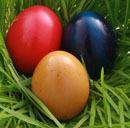
Dyeing your own real eggs can be a healthier substitute for candy. But beware of the dyes that you use. Most egg dye kits are labeled as non-toxic, but that doesn’t mean they are free of harmful ingredients. Look for plant-based dyes instead. The most enjoyable and educational solution is to create your own natural dyes by experimenting with foods like spinach, orange peel, and red cabbage (which produces a blue coloring, not red). To create a colored design on an egg using yellow onion skins, wrap the dry outer skins around a raw egg and hold them in place with a rubber band. Hard boil the egg, unwrap it and you’ll have a lovely random design and rich orange/gold color on your egg. For a lovely pink egg, soak a hard boiled egg overnight in beet juice.
The baskets that traditionally carry all those eggs can be problematic too, all too often finding their way into the trash a few days after Easter. Look for alternative containers like small plastic wagons, dump trucks, book bags, toy carrying cases, and other things that can have a second life after Easter. Small laundry baskets, recycling containers or wastebaskets can be decorated with stickers, markers, ribbon, fabric strips, or raffia. And skip the petroleum-based plastic “grass” in favor of natural products like sprouted wheat grass or raffia, or recycled products like paper from your shredder.
Older children might enjoy foregoing the eggs and fuzzy chicks altogether in favor of a plant pot, some heirloom seeds, and soil so they can grow their own herbs or small veggies.
Members of your extended family might not be in agreement with your desire for a healthy, eco-Easter. Nevertheless, don’t be afraid to share your concerns about too much chocolate, candy dyes, or excess packaging. Give them some alternative suggestions. Or ask them to join in some fun activities, like experimenting with natural dyes on a few dozen hard-boiled eggs or participating in an Easter Egg hunt.
Or hold a recycled Easter bonnet parade with everyone crafting a unique piece of headgear out of scrap materials. Or plant some trees. Kenyan Nobel Peace Prize Laureate Wangari Maathai called on people around the world to plant trees at Easter as a symbol of renewal and to protect the planet. “If it was a worldwide campaign it would be wonderful; you can imagine the millions of trees that would be planted,” Maathai said when she received the 2004 Nobel Peace Prize. Maathai, a Christian who has led plantings of 30 million trees across Africa to combat deforestation, thought that an annual tree-planting drive could symbolize revival for all peoples. Easter is a good time, she said, because Christians believe that Christ was crucified on a wooden cross, which must have necessitated the felling of a tree.
One family we know stages a family spring cleaning event on Easter weekend. They think up the chores at a family meeting and then write them on pieces of paper and put them into a big jar. Each person takes a slip of paper and runs off to complete the chosen task within a certain time limit. When their chore is completed, they take a fair trade chocolate egg from a second jar. With some energizing music on the stereo and everybody sharing the work, the cleaning is accomplished in a short period of time, often accompanied by lots of hugs and laughter.
Lastly, preparing and sharing healthy food is a great way to celebrate any occasion, especially the beginning of the growing season. Host a potluck with a theme, such as only local food, or one that puts you in touch with people in the developing world by using cookbooks like The More-With-Less Cookbook.
 Valentine's Day Valentine's Day
At Valentine's Day, many people’s thoughts turn to images of heart-shaped boxes of chocolates. Fortunately, hearts and chocolate go very well together...especially if it's high quality dark chocolate. Scientists at the John Hopkins University School of Medicine have found that a few squares of dark chocolate a day can reduce the risk of a heart attack by almost fifty percent in some people. Apparently, substances in cocoa beans have a biochemical effect similar to aspirin in reducing blood platelet clumping, which can be fatal if it leads to a clot that blocks a blood vessel. In other words, it functions in the same way as aspirin in preventing heart attacks. In spite of these health claims, there’s no getting around the fact that chocolate is a high fat food. Nevertheless, you can give a gift of dark chocolate without guilt – especially if it is Fair Trade.
Wine is another staple of a loving celebration. So be sure that the wine you buy to toast your Valentine is made from organically grown grapes. Organic wines also contain no added sulfites as preservatives, so your red wine toast won't give your sweetheart a headache! Organic wines from local growers are the most environmentally-friendly choice because they have not been shipped long distances.
You'll want to turn the lights down low while you're celebrating with that Fair Trade dark chocolate and organic wine. And that's always a great way to save energy! But be sure that the candles you choose are made from beeswax or soy instead of paraffin. They are made from natural materials, will last longer and you won't be dirtying the air with soot. Unscented is better for your true love's health, since most commercial scents contain harmful chemicals.
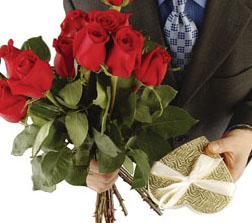
Flowers are the other favorite gift for Valentine's Day. Unfortunately, giving a gift of cut flowers may not be the wonderful expression of love that you intend it to be. That’s because whenever you or a loved one touches or inhales the scent of your conventional bouquet, you are likely touching or inhaling poisonous chemicals.
The floral industry is one of the heaviest users of hazardous agricultural and processing pesticides. In addition, the majority of flowers sold in North America are imported from countries like Ecuador and Columbia, where labor practices are sometimes questionable. Studies by the International Labor Organization and Ecuador’s Catholic University have found that many farm and post-harvest workers complain of pesticide-poisoning symptoms. Women, who represent 70 percent of all rose workers, experience significantly elevated rates of miscarriages and birth defects.
So be sure you look for flowers and ornamental plants certified with the Veriflora label. This certification program requires growers to use pesticide-free, sustainable agriculture methods and includes fair treatment of workers (health benefits, safe labor practices, fair wages, the right to organize, etc.), water conservation, habitat protection, waste management and a commitment to energy efficiency and responsible packaging. Bouquets with this certification are increasingly available both in stores and online. Better still, give flowers grown locally – again, increasingly available. You might not be able to find local roses in February, so try to keep an open mind as you choose.
And, again, check out the list of gift alternatives at the end of this article for some unique, healthy, and eco-friendly ways to tell someone of any age that you love them at Valentine's Day.
Gift Alternatives
-
Children love personalized gifts, so create a simple book about the child, written and illustrated by you.
-
Collect all the makings for hand puppets — brown lunch bags, googly eyes, scissors, markers, etc.
-
Record interviews of parents, grandparents, aunts, and uncles on audio or video tape; you can ask them to discuss their memories of the person you plan to give the tape to, or your family’s history, especially funny or meaningful anecdotes.
-
Frame one of your best photographs. Buy a frame from a local business or artisan. Or make one yourself out of stiff paper or cardboard, decorated with colored paper, old wrapping paper, beads and/or leaves, small pinecones, or seeds.
-
Make your own calendar using cut-out pictures, photos, and/or drawings.
-
Assemble a collection of favorite recipes.
-
Make a film of the kids putting on a play. Send it to the grandparents with a holiday song as the finale.
-
Bake a basket of muffins and cookies and deliver them to neighbors.
-
Create a hand-decorated coupon for your best friend promising a weekend of babysitting while she and her spouse take a weekend away from the kids.
-
Create a coupon book of certificates for your children – ten gift coupons for them to redeem during the year. One could promise a Saturday afternoon building a playhouse. Another might be a “Play Hooky” coupon promising that parent and child will just take off from work and school one day in the coming year to take a rest. Another might be a promise of tennis lessons or an afternoon of making cookies.
-
Your teenager could make a coupon to give to Dad, promising to wash the car or to make dinner three times.
-
Promise your significant other some special activities – a candlelit dinner, massage, or outdoor activity that you both enjoy.
-
Assemble a gift basket with LED lightbulbs, forms for getting rid of junk mail, healthy recipes, some weatherstripping, and cozy slippers.
-
Give a membership or a donation to a local cause such as a soup kitchen, a shelter for battered women, a local environment group, etc. Contact local churches, synagogues, and charitable organizations for ideas.
Learn More
The Rituals Resource Book: Alternative Weddings, Funerals, Holidays and Other Rites of Passage by Susan Mumm (Alexandra Yul Publishing, 2004)
Hundred Dollar Holiday: The Case For A More Joyful Christmas by Bill McKibben (Simon & Schuster, 1998)
Treasury of Celebrations by Alternatives for Simple Living (Northstone Publishing, 1996)
Celebrating the Great Mother: A Handbook of Earth-Honoring Activities for Parents and Children by Cait Johnson, Maura D. Shaw (Destiny Books, 1995)
Unplug the Christmas Machine: A Complete Guide to Putting Love and Joy Back into the Season by Jo Robinson and Jean C. Staeheli (Harper, 1991)
Alternative Celebrations Catalogue, 4th Edition by Bob Kochtitzky (Alternative Books, 1978)
|