|
A Composting Primer:
How to Recycle Yard and Kitchen Waste into Garden Fertilizer
by Wendy Priesnitz
Composting is Nature’s way of recycling. It decomposes and transforms organic material into humus. Food scraps, leaves and yard trimmings, paper, wood, manure and the remains of agricultural crops are excellent organic materials for composting.
It is estimated that about 50 percent of the total waste stream could be composted, although most areas don't meet that goal by half. Aside from reducing the amount of waste going to landfills, composting produces a valuable soil amendment which can improve the texture and fertility of the soil in your vegetable or flower garden. Compost adds organic material to the soil, as well as trace elements like iron, manganese, copper and zinc, which are required for plant growth. It binds the nutrients in the soil, ensuring they are available over a longer period of time for plants to utilize them. Compost also improves soil porosity and soaks up water, thereby increasing the soil’s water-holding capacity.
The composting process uses micro-organisms such as bacteria and fungi to break down the organic materials. For the process to work best, it is important that the micro-organisms have a continuous supply of food, water and oxygen. As well, managing the temperature of the composting material is important to make the process work.
It is also important to give the micro-organisms a “balanced diet”. Although most organic materials provide all of the nutrients for the micro-organisms to grow, they grow best with certain levels of carbon and nitrogen. Paper, leaves and wood are high in carbon while grass clippings and vegetable scraps are high in nitrogen. Combining the correct mix of carbon and nitrogen materials helps to get the best results.
How To Compost
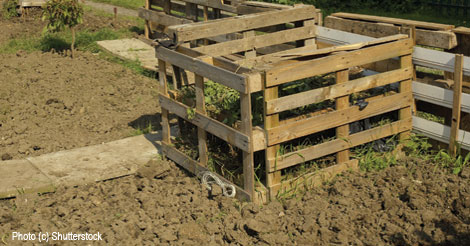
Home composting can be done with the use of a “build your own” bin or with a commercial unit, often available through your municipality.
An important first step to getting started is to place your composter in a sunny area with good drainage. Make sure that the location is convenient and accessible year round. After placing the composter in a good location, cover the bottom with a layer of small branches. This will allow for air movement and drainage. Then simply begin to alternate layers of wet and dry waste.
If available, add some “finished” compost, garden soil, or a compost starter to the pile. This helps speed up the start of the composting process.
The composting process works best when the organic pieces are small. Weeds and trimmings should be shredded. Don’t add thick layers of any one kind of waste, especially grass or leaves, in order to avoid compacting, which will slow down decomposition.
Most household organic waste can be composted at home, including:
- Chopped leaves
- Dried grass
- Discarded plants and leaves
- Old potting soil
- Fruit scraps
- Vegetable trimmings
- Crushed egg shells
- Tea bags
- Coffee grounds with filters
- Shredded paper
Do not include meat, fish and bones, plastics, metals, fats and oils, dairy products, pet waste, cheese, meat or sauces.
The contents of your composter should remain as moist as a wrung-out sponge. If it is too dry, it will take overly long to compost; and if too wet, the contents may begin to smell. Turn or mix the compost every couple of weeks or each time you add a large influx of new material. This keeps the compost well aerated.
You can add materials to your composter all winter long. The process slows down or stops when the pile is frozen, but it will start up again in the spring, after a thorough turning. Empty the composter in the fall to make plenty of room for the winter’s additions.
Compost is ready to be used when it is dark in color, crumbly and has an earthy smell. You can sift the compost to eliminate material which has not yet finished composting. Return this back to the pile to complete its transformation into humus.
Troubleshooting
Here are some easy solutions to correct certain situations which might occur.
If the pile does not decrease in size or generate heat, the process may need a boost. If the pile is dry, add water, mixing thoroughly. If the pile is wet and muddy, spread it in the sun and add dry material. Remember to save some old compost to mix with incoming material.
If the centre of the pile is damp and warm, but the rest is cold, the pile may be too small. Try to keep your composter as full as possible. Mix new with old, dry with wet, breaking up mats and clumps.
If the pile is damp and sweet smelling but not heating, it may need nitrogen. Add grass clippings, table scraps or a sprinkling of organic fertilizer.
If the compost pile develops a foul odor, it may not be getting enough air. Loosen up the pile, break up clumps, unblock vents and perhaps add some wood chips to help the pile breathe. Turning the pile always helps aeration.
Compost in a container with a cover to prevent animals from getting into it. A wire mesh around the base can help to prevent pests from digging under the pile. Dig in or cover food waste immediately.
The composting process can take from two months to two years, depending on the materials used and the effort involved. To accelerate the process, the pile must be a balance between wet and dry material. Turn it frequently and make sure the waste is shredded or in small pieces.
Using Compost
Compost can be used in a variety of ways.
Top dressing: Aerate the entire area before top dressing. Spread mature compost evenly over the surface using a rake, to a depth of one quarter to half an inch. Then water thoroughly.
Tree Planting: Rototill an area about four times the diameter of the root ball of the tree to be planted. Add about 30 percent compost by volume to the area and mix thoroughly. Dig a hole, place the tree into the hole and use the compost amended soil mixture to backfill around the roots. Water thoroughly.
Vegetable Garden: Apply about one-inch of compost and mix into the soil to a depth of about five inches. Do not overapply compost to a vegetable garden, since some vegetables will not produce high yields with too much nitrogen.
Mulch: Use a few inches of compost to mulch around annuals, perennials, trees and shrubs. Over-mulching will smother roots sytems. Arrange mulch so that water flows away from tree trunks, reducing chances of crown rot.
If you live in an apartment or somewhere else that doesn't allow space for an outdoor compost pile, here are instructions for starting a worm bin, or vermiculture, composting system.
Wendy Priesnitz is the Editor of Natural Life Magazine and a journalist with 40 years of experience. She has also authored thirteen books.
|