Crone Pending
by Maureen Evans
In spite of cultural stereotypes, menopause brings women new freedom
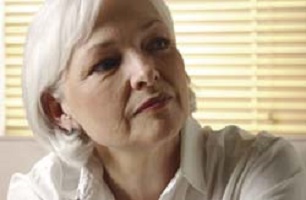 When I was growing up in the middle years of the 20th century, the word “Crone” brought to my mind the image of the three witches who stirred their foul brew in Macbeth. But I have since learned that, during ancient times, female deities – and every great civilization had one – were always seen in three phases: Virgin, Matron and Crone. When I was growing up in the middle years of the 20th century, the word “Crone” brought to my mind the image of the three witches who stirred their foul brew in Macbeth. But I have since learned that, during ancient times, female deities – and every great civilization had one – were always seen in three phases: Virgin, Matron and Crone.
In her aspect of Crone, the goddess was considered to be at her wisest, for the menstruum that marked the matron’s monthly cycle was believed to weaken her physically, mentally and emotionally. When the Wise Blood ceased to flow, a woman took on a new importance in her community, acting as a counselor for all members of the group, even the warriors who once had seen her as a vessel and child-bearer or, worse, as a commodity.
In the Christian church, the virgin is well represented in the Virgin Mary, of course, and the matron is also Mary, as the Mother of Christ, but the Crone no longer has a representative. In fact, the Crone has become the withered witch of fairy tales, beyond the pale as far as “normal society” was concerned, so for thousands of years our culture has looked askance at the older woman, seeing her as the harbinger of death, the frightening character that any woman may become should she live long enough.
Aye, there’s the rub! Fail to die in childbirth or of some “female problem” after birthing 10 or 20 children, and eventually you turn into the stereotypical big-chinned Wicked Witch of the West, threatening to kill Dorothy’s beloved little Toto.
Until modern times, women did not often survive their fertile years and, if they did, life was often perilous, with the hapless females having little or no say in their fate.
If she was wealthy, the older widow was often relegated to life in a convent or, with a maid or two, to a dowager apartment in her own house, away from the main living area, which had now become the domain of her daughter or daughter-in-law. If she were to find a useful existence, it would only be at the mercy of her son and she was usually encouraged to withdraw from most aspects of life.
Should a poor woman outlive her husband, she would often eke out a meager living on the edge of society. She might earn her keep by helping to raise her grandchildren, but if none of her children survived, her lot in life was uncertain. If other members of the community valued her as a “wise woman” she was lucky, for otherwise she might be scorned, tormented or even burned as a witch, merely for being intelligent and having the knowledge of a long life at her disposal.
But times have changed. With her children raised, the modern Crone can devote herself to the mate she has often had to short-change during the busy times of child-rearing, and she can approach her hobbies, social contacts or career in the focused way that men can, and that we women often envy.
She may also enjoy a new freedom that she never had as a younger woman – the freedom to act in a way that, when she was young, may have been considered outrageous. If tongues wag when she has lunch with a younger man, will she blush for shame? Not likely. If she chooses to pierce her ears three or four times, need she feel self-conscious? I think not.
Many women find new meaning to their lives as they shuffle off the vanities and fears of their youth and stand beside their husbands as fellow travelers through life, not as adjutants to their mates. Often their men are unable to come to grips with this “change” and seek solace with younger, less confident companions, making it imperative that the post-menopausal woman maintain her female friends and the network of support they can supply.
Now, the word Crone is being rediscovered and the stage of life it represents is now being celebrated by woman all over North America. As our life spans are being pushed towards 85 and 90 years, groups of post-menopausal women in all the major cities are getting together to support each other in this often difficult time when children are gone from home and the marriage itself is often in a state of flux. They make a celebration out of the transition from matron to Crone, embracing and endowing it with the same importance that is given to one’s coming-of-age and marriage.
As modern Crones, the women of my generation must make a conscious effort to break the stereotype that has plagued the older woman for thousands of years and strive to make a difference to the world around us as only Wise Women can.
Maureen Evans is a writer who lives in rural Ontario, Canada.
|