|
Organic Matters: Shelterbelts
by Jeff Johnston
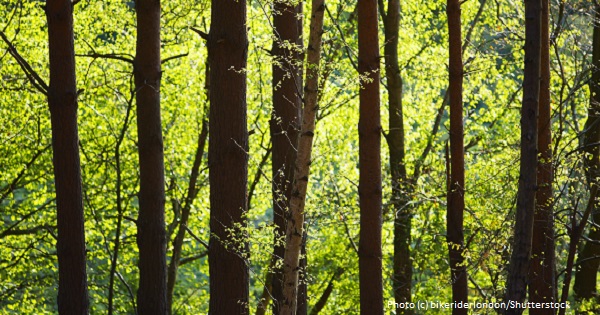
Trees play an integral part in sustainable – or as I prefer, “regenerative” – agriculture (with all the damage we've caused, we can't afford to simply sustain anymore). A shelterbelt is a row (or rows) of trees planted across the prevailing wind direction to slow or deflect the wind. A shelterbelt will alter significantly the microclimate around your home and gardens or fields.
Trees (particularly deciduous trees) transpire, giving off huge amounts of water every day. As the water evaporates, it cools the surrounding area, reducing the stress on nearby crops. By altering wind patterns and slowing the winds, shelterbelts reduce the drying effect winds have on your crops. They can also reduce heat stress on animals and the people working in the fields.
Dense shelterbelts (coniferous trees, thick shrubs such as carragana) protect the soil from drying out in winter by keeping snow on the ground, which raises the watertable and reduces the need to irrigate during summer. They also reduce winter erosion on large fields where cover crops are not practical (experts estimate that Canadian farmers lose billions of dollars every year due to erosion). As an added bonus, these shelterbelts keep your house warmer in winter, reducing your heating expenses.
You might think shelterbelts remove large portions of land from production; however, research done in Alberta by the Prairie Farm Rehabilitation Administration (PFRA) showed that increased yields in the sheltered area make up for this loss of productive land. Levels reach higher than 100 percent of the original yield from 1.5 to 15 times the height of the shelterbelt, returning to 100 percent from 15 to 25 times the height. Thus, trees 30 feet high will increase your yields 45 feet away to as much as 450 feet away.
As with all things organic, you'll need to plan before you rush out and plant a few trees (or shrubs). The PFRA recommends that you review your present requirements (e.g., erosion control, reducing crop heat stress due to evaporative water loss), then assess your future needs, estimate the quality of any existing shelterbelts, and plan new belts for unprotected areas. Map your home area at one inch = 100 feet (2.5 cm = 30 m); if you have large fields (e.g., a quarter section), use one inch = 440 feet (2.5 cm = 134 m). Mark the locations of existing trees, buildings, access roads, powerlines, ponds, etc. Draw in the prevailing wind directions and where snow accumulates (to eliminate snow buildup, plant trees at least 100 feet from your buildings and driveways). Remember that in many areas of the country there are two prevailing winds – the hot winds of summer and cold winter winds.
Henry Kock of the University of Guelph Arboretum recommends using dense conifers as winter windbreaks to protect houses, outbuildings, and livestock. In eastern Canada, cedar and white spruce will deflect the wind up and over buildings; in western Canada, juniper is useful. Henry recommends deciduous trees and open conifers like white and red pine for use near croplands. The openness of these trees traps the wind and slows it down rather than deflecting it over top of the shelterbelt. This results in some air movement along the ground in the sheltered area, which will protect crops from diseases that develop in still air. Henry recommends oaks in eastern Canada, although if you're tight on space, you could create a shelterbelt out of hardy fruit trees and berry bushes. He also recommends using one densely planted row.
The PFRA recommends planting up to five rows on the north and west sides to protect from prairie winds; two or three rows are adequate for the south and east. Around the farmstead, use fast growing, long-lived, tall, and dense species. A dense shrub (preferably fruit-bearing for wildlife) is the outside, snow trap row. A fast growing species is the second row, and a long-lived species the third. If you have room for only two rows, one should be dense shrubs and the other dense trees. Leave sufficient room between the rows for maintenance equipment.
On prairie fields, the PFRA recommends growing tall trees wherever possible since the area protected is directly related to the shelterbelt height. If you have very erodible soils, choose dense-growing trees. The first row should be less dense to allow even snow distribution across the field. If you grow on a quarter section or larger, plant shelterbelts every 660 feet across the prevailing winds.
Henry Kock recommends that you look at Nature in your area and learn how trees function, then plant by Nature's example. The PFRA tells its clients to plant only as many trees as they can care for, as more are killed by grass and weeds than by any other cause. Also, protect them from livestock by fencing animals out, and don't grow them closer than 100 feet from any roadway.
Planting trees this year will not produce much of an effect on your fields this winter and your crops next summer. However, if you follow these recommendations and guidelines, in five to ten years you'll have created a farm or garden that requires fewer inputs and less water, conserves soil and produces more food, and is beautiful to the eye and soothing to the ear.
Jeff Johnston is a past president of Canadian Organic Growers and a Permaculture design course graduate. He has worked on conventional and organic farms, and gardens organically. This article was published in 1997.
|