The Herb Garden
The joy of growing and using herbs
Using Wild Plants
by Rachel McLeod
 As I write this we are still in the grip of winter...it is cold. But I know that by the time you read this, Spring will be here and plants will be emerging from dormancy. This is the time when many people follow the examples of the pioneers before us and go out to collect wild foods and herbs as they become available. As I write this we are still in the grip of winter...it is cold. But I know that by the time you read this, Spring will be here and plants will be emerging from dormancy. This is the time when many people follow the examples of the pioneers before us and go out to collect wild foods and herbs as they become available.
There is a vast selection of edible plants available in the wild. Some are the wild relatives of the herbs we grow in the garden such as mint and watercress. Others are plants that are used as vegetables like lambsquarters and stinging nettles; these are known as potherbs. In addition there are plants used for a variety of foods – young dandelion leaves for salads, wild leeks for pickles, and elderflowers for fritters are only a few of the many choices.
As well as those we use for meals, there is another vast amount of wild plants we may collect for medicinal uses such as yarrow flowers and red clover or, to get on-the-spot relief from bites or stings, such as plantain leaves or dock.
If we are going to use wild plants as food or medication we have to be responsible for ourselves. This means that.....
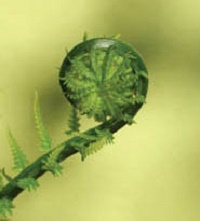
1. We must be certain that we can identify a plant correctly in all stages of its growth. For example fiddleheads are the young shoots of the Ostrich fern found growing in clumps in the marsh. They are delicious and generally considered safe. But to the uninitiated the young shoots of bracken could look very much the same. However the bracken shoots grow singly and are spread out over a dry area. Bracken has been found to be carcinogenic and should not be eaten. (The Ostrich Ferns are particularly easy to recognize as they have spore bearing dark brown fronds rising out of the clump; the bracken does not.)
2. We must collect plants only where there is no danger of contamination by insecticides, fertilizers or traffic fumes. Although thorough washing of the plants is necessary, this will not always get rid of contaminants so the area where the plants are collected should be studied carefully. Watercress is a good example and it should not be collected from areas where there is danger of a runoff from farmland.
3. The plant itself must be thoroughly researched; some parts maybe toxic while others are not. For instance, most people know that while we can enjoy young rhubarb stalks the mature leaves are poisonous. Potatoes which have been left in the light and turned green also have toxic properties and the green part should be removed before they are used.
I am grateful to Colleen Cooney who brought this to my attention in her letter in the November/December issue of Natural Life, when she wrote about elder flowers and that she became ill after eating them. We will all have different reactions to foods and probably have to go carefully with new foods until we know how our bodies respond. We all have friends who cannot eat mushrooms, shellfish or in some cases even nuts and they avoid them in their diet. With wild plants and herbs we need to be especially aware; many wild plants, though not toxic, do have purgative effects which may cause discomfort. I have a friend who loves her spring salad of violet leaves even though she knows that she may well have some problems if she over-indulges.
Books may not always help...out of eight books on collecting and cooking wild plants three warned of the purgative properties of the elder stems; the others, more cooking oriented, made no mention of it. Herbal books also do not mention any problems. In fact all parts of the elder plant can be used medicinally if prepared properly. Of course great care must be taken in the preparation of any new food and any instructions closely followed. There are a few general guides.
It is best to use plants fresh or dried but never wilted, it seems that as they wilt there are chemical changes which could cause problems. Also if any recipe says boil and change the water once or even up to three times be sure to follow the instructions. I once gave myself a very anxious time when I ate a marsh marigold bud before it was cooked when I was making capers; the texture was delicious but the experiment will not be repeated!
To sum up. It is great fun collecting wild plants and herbs for food and perfectly safe if some rules are followed.
1. Know your plants and if in doubt ask an expert.
2. Check the area where you are collecting for contaminants
3. Read about the plant in more than one book and follow the instructions for preparation and cooking carefully.
4. Start with small amounts and watch for reactions in your own body before eating large quantities.
So on to Summer and good wishes for good foraging as well as good gardening.
Rachel McLeod founded Kiln Farm Herb Garden in Puslinch, Ontario in 1974.
|