The Herb Garden
The joy of growing and using herbs:
Fennel
by Rachel McLeod
Of fennel virtues foure they doe recite,
First, in hath power some poysons to expell,
Next, burning Agues it will put to flight,
The stomack it doth cleanse and comfort well:
And fourthly, it doth keepe and cleanse the sight
And thus the seed and hearbe doth both excel.
~The School of Salernum
The medical school in the town of Salerno in Italy was the oldest school in Western Europe for the teaching of medicine and philosophy. It is not known when it came into being but was considered ancient in A.D. 846 and it continued to be the most famous school for some centuries. It was at its greatest from the eleventh to the thirteenth century. The original prescriptions for a healthy regime were in Latin but were translated faithfully into English in 1607.
The lines above are one of the references to Fennel (Foeniculum vulgare) and show how at that time it was considered a very important medicinal plant.
All through Mediterranean countries and other countries in the world with a similar climate such as New Zealand and parts of California, big stands of wild fennel are common. It grows up to a meter or more in height and with its huge columns of feathery leaves it is an impressive sight. In late summer the fronds are crowned with umbels of yellow flowers, these form seeds which ripen in the fall.
Fennel is easy to grow, the seed germinates quickly but needs to be started early in northern climates where it will not overwinter and has to be treated as an annual. Place the seedlings at the back of the garden where their height and beautiful fronds will make a lovely backdrop. Though it is beautiful, fennel is disliked by many plants and it has been found by companion planters to inhibit the growth of bush beans and tomatoes also it should not be planted near dill as they are closely related and may cross pollinate which might affect the flavor of the seeds.
If you are fortunate enough to find caterpillars on the leaves do not spray or kill them until you have identified them. Fennel is host to the swallowtail butterfly caterpillars and swallowtails are large and beautiful, like flying flowers making the garden even more lovely. The caterpillars are green with transverse stripes in black but they vary with the species of swallowtail.
For culinary use, the tender stalks and leaves can be picked fresh but they lose their flavor if they are dried. For winter use and for teas and medicinal purposes, the seeds are used. They should be harvested at the end of summer by placing a paper bag over the seedhead so that they do not fall as they ripen.
The dried seeds are delicious in bread, cookies and apple pie, also as one of my favorite herb teas. Fennel seed tea has a lovely flavor and the added benefit of the reputation of helping the body to lose weight and relieving indigestion. It has other medicinal uses; the tea is recommended as an eye lotion, to soothe tired eyes and clear the sight. Fennel seed is used with leaves and barley water to increase the milk yield for nursing mothers and the seeds are the basis of gripe water which over the years has helped millions of babies to burp their problems away! Greek athletes included fennel in their diet to guard against overweight and give stamina and courage. Perhaps today's Olympic athletes use fennel too.
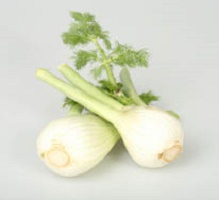
Another variety of fennel is Finocchio or Florence Fennel (Foeniculum vulgare.var.dulce), which in late summer forms a large white swollen bulb at the base of the stem. This is often sold in the vegetable department as anise. Although fennel and anise are related this white swollen stem is not anise but the confusion probably comes from it having a distinctly anise aroma and taste.
Anise (Pimpinella anisum) is a small, rather weak stemmed relative of fennel grown only for its seeds which have a liquorice flavor).
Timing is important when growing Florence fennel. Once the bulb has formed it should be harvested quickly; if left the plant will send up a flowering spike using the energy stored in the bulb which will shrink overnight! The mature fennel bulb can be chopped up and used in salads or with fish dishes. Fennel combines particularly well with oranges and a delicious salad can be made from thinly sliced rounds of the bulb mixed with orange segments, dress with lemon juice and oil and add salt and pepper to taste.
Bronze fennel is another beautiful garden plant. Like the green fennel, it grows large feathery fronds but this time they are a copper color, which is magnificent in any flower border and acts as a wonderful contrast in color, form, and texture. The only snag is that it too changes character when it flowers and stops the production of the handsome leaves, the bushiness disappears as the stems elongate to hold the flower umbels high leaving a gap in the garden design. This could easily be overcome by succession planting. Bronze Fennel is best treated as an annual here but in well drained soil and a warm sheltered position it may winter and will certainly self seed. The leaves are edible like all the fennels and make a beautiful garnish combined with the green variety.
Rachel McLeod founded Kiln Farm Herb Garden in Puslinch, Ontario in 1974.
|