from Natural Life Magazine, May/June 1994
The Natural Child Column
Compassionate Nurturing of Young Children Can Prevent Violence in Society
by Jan Hunt
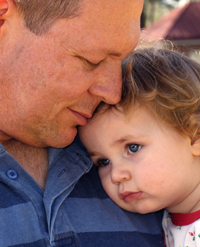
Photo © Shutterstock Images |
We are living in a time of violence. Four white policemen club a black man with nightsticks 56 times. A young boy, just 12 years old, shoots to death his foster parents. What can we learn from the increasing number of violent tragedies?
Many believe that social service agencies have failed to prevent such violence. But it is not only agency procedures which should be re-examined. The public school system, with its captive audience of young, future parents, has a precious opportunity to provide crucial parenting information. Yet few schools offer parenting classes.
Despite over 10,000 hours of school attendance, very few high school graduates are prepared for the most important job they will have – parenting their children. Few of these future parents are knowledgeable about such crucial matters as prenatal care, childbirth options, breastfeeding benefits, or compassionate infant care. Those few who do have useful information on these topics probably learned it at home. Many educators are beginning to see the harm that is done by filling children with disconnected facts that have little relevance to their lives while denying them the practical and humane skills they need to function successfully in the real world.
Dr. Elliott Barker, Director of the Canadian Society for Prevention of Cruelty to Children, who has spent over two decades counseling murderers, rapists and other violent men, believes that our best hope for preventing violence lies in educating future parents. He warns that “nothing is more important in the world today than the nurturing that children receive in the first three years of life, for it is in these earliest years that the capacities for trust, empathy and affection originate. If the emotional needs of the child are not met during these years, permanent emotional damage can result. One major obstacle to adequate nurturing in the first few years is the incredible lack of preparation for parenting. The current elementary school curriculum should be scrapped and substituted with one that covers every aspect of child care.”
Surely it is the responsibility of parents, teachers, and all those fortunate enough to spend time with children, to contribute to a peaceful world by treating these future parents with dignity, respect, understanding, and gentle explanations, and by making in-depth parenting education available to all young persons.
Those who would like to see information on parenting presented in all grades should ask school boards why students are being taught such relatively useless information as solid geometry, as few of us use such knowledge in our everyday lives (and if we find that we need this information as adults, we can easily obtain it at that time). After all, what is the importance of such little-used information compared with a knowledge of empathic As Dr. Barker concluded in his presentation to a Senate Subcommittee on Childhood Causes of Criminal Behavior, “What I keep coming back to is that it's like pouring cement. If you don't mix the batch right, you are stuck with it, and you have to get at it with a sledgehammer later – it's a slow, difficult and almost impossible process. In the first three years of the child's life, the cement is setting, and parents ought to set every other priority aside and do their best.”
School boards should be asked why our children are being given almost none of the crucial information they will need later as parents to help them raise emotionally healthy, caring individuals who will treat others with empathy.
Television and newspaper reports, discussing the revolution following the initial acquittal of some Los Angeles police officers, rightfully pointed to the economic, social and political roots of the anguish and anger brewing for so long among the members of minority groups. But until all children are treated with empathy and compassion, are shown non-violent means of solving problems, and learn about critical aspects of parenting before they themselves become parents, blindness to violence will only continue among police officers, jury members, lawyers, troubled little boys, rioting adults and all those who express their outrage at violence with more violence.
|