Rethinking, Revising, & Revisioning The 3Rs
By Rashel Tremblay
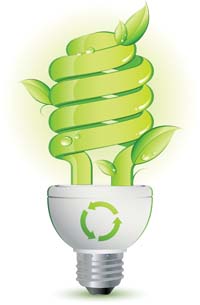
Image © beboy/Shutterstock |
Just about forty years ago the environmental group Pollution Probe started using the 3 Rs slogan: Reduce, Reuse, Recycle as a basis for managing our waste habit. We’re rethinking and revising the concept as a basis for sustainable living.
What does the phrase “The Three R’s” mean to you? If you’re a baby boomer, “reading, ‘riting, and ‘rithmetic” may come to mind first. If you’re from a younger generation then it’s more likely, “Reduce, Reuse, Recycle.” Since this catchy phrase was first taught to school children a few decades ago, it has become the slogan for the environmental movement. But is it still relevant and is it enough to solve the problems we face today?
When I started to research when and where the phrase “The Three Rs” came from I learned that it was designed for a waste reduction and management hierarchy. I couldn’t find an encyclopedia entry for the phrase, only for the term “recycling.” My local library carries many books on recycling but none on the entire concept of sustainable living. I’ve heard folks say “I’m eco-friendly – I recycle!” Recycling has obscured the more important first two steps – reducing and reusing – and permitted many people not to reconsider their purchases based on need or reusability but only on its perceived recyclability. What is recyclable in one community isn’t in another and many municipalities are finding that recycling is a losing financial enterprise. What you put in your blue box may still be sent to a landfill, after a brief detour.
My friend Victoria, from Toronto, Canada, mentioned to me in the early years of the new millennium that she had been taught Five Rs – Rethink, Reduce, Reuse, Repair, and Recycle. There are many blogs online where folks have expanded the concept of the Three Rs to include a more wide-ranging and far-reaching list. The time for a new generation of Rs that will make a huge impact on our footprint is here. And it will take creativity, as well as some fun, to think up as many R words for sustainable living as we can!
Rethink
Karin from Sweden, the mother of a one-year-old, says that when she is in a store she stops to consider whether she really needs an item or not, whether she can wait and get a more sustainably-produced item or one at a lower cost. We are called on to Rethink our whole pattern of consumption and to Redefine and Reconsider the difference between what we want and what we need. We can Revise our buying and lifestyle habits and Relinquish personal convenience for the greater good. Do we really need to constantly upgrade our technological gadgets – cell phones, PDAs, televisions, computers, etc?
| The time for a new generation of Rs that will make a huge impact on our footprint is here. And it will take creativity, as well as some fun, to think up as many R words for sustainable living as we can! |
With fun websites like How Stuff is Made, we can Research the life-cycles of various products from beginning to end – what materials and resources are used, how much pollution is created, how far it travels to get to your city and where it goes when you are finished with it. Have you ever wondered about the life cycle of a typical made-in-China plastic toy? Helium balloons seem like innocuous fun, unless you are a sea turtle and you mistake one for a jelly fish and end up choking to death. We need to Resist, Refuse, and Refrain from the enticements of a capitalist society that values consumerism over the environment.
Reduce
We all know we can change our light bulbs or buy energy-efficient appliances and vehicles to reduce our consumption of resources. But did you know that artificial fertilizers used in food production are made of fossil fuels? Buying local, organic food is a big step in reducing our footprint. We all need to eat and food is not something we can choose not to buy. By supporting local growers, we can Reduce the distance our food travels from the field to our plate – currently an average of 4,000 kilometers – and will enjoy fresher, riper food. We can Restrict our water consumption by using rain barrels to harness rainwater for our gardens. We can reduce toxic waste by using Rechargeable batteries. And we can support Renewable energy sources. But to make a real impact, we must focus on Reduction.
Reuse
Instead of throwing plastic containers in the recycling box, why not wash them out and use them for leftovers instead of buying new plastic for the same purpose? The plastic will end up in the recycling box eventually but it does mean buying and discarding less plastic overall. Instead of using disposable paper products made from clear-cut old-growth forests (napkins, tissue paper, toilet paper, diapers, and menstrual products) buy or make cloth alternatives that can be Reused over and over and then put in a compost bin when worn out. Toss your used scrap paper in there, too. Many materials can be reused for arts and crafts, gardening tools (shovels or watering cans), and even homemade funnels. There are many creative ways to Re-purpose an item and your local library is a good place to find reused books about the different ways in which ordinary household products can be reused instead of thrown out or recycled (especially in the children’s section). Donating to and shopping at second-hand stores are a great way to reuse clothing, toys, books, and other household items. Better yet, find a freecycle or reuse it group in your community (they are usually online) where people give and get various items for free. Creative folk also know that Re-gifting is also a great way to Reuse!
| Many materials can be reused for arts and crafts, gardening tools (shovels or watering cans), and even homemade funnels. |
Repair
Many products are thrown away when all they need is a bit of Repair. We wouldn’t throw our cars away because a belt broke, so why throw a bike away because the chain breaks, or a pair of pants because it has a hole in it? If you don’t have the skills to repair something, reach out to friends and family who do. An item can be Restored to its original functioning purpose. Tara Wagner from The Organic Sister website suggests Renovating instead of building from new. Sometimes an item just needs a new coat of paint to make it new or more pleasing again.
Rot
It’s estimated that food scraps make up thirty percent of all waste, second only to paper/cardboard at thirty-two percent. Unfortunately, most communities don’t pick up kitchen scraps so a huge natural resource – compostables that convert into rich fertilizer for growing plants and food – is being wasted. You can add materials like cork, cloth, bits of scrap paper, lint, mowed grass, and leaves to your compost bin. Many folks don’t mind throwing food scraps in the garbage because “it will decompose, I’m helping the landfill.” This is erroneous. If you dig into the bottom of a landfill you will find newspapers from fifty years ago still intact because the anaerobic conditions (lack of oxygen) means that nothing decomposes there. If you don’t have a yard, try a container of red wiggler worms and vermicompost. The worms eat the food and what they excrete is gold for the garden! When you compost, you are Regenerating, Replenishing, Returning, Replacing, Renewing, Re-soiling and Re-loving the Earth that grows and nourishes your food or herbs.
Reconnect
In the book Last Child in the Woods, author Richard Louv coined a new term “Nature-deficit disorder.” Most children are no longer growing up near natural areas. While most of us have fond memories of exploring nearby woods or streams, we have become disconnected from the natural world. We are more apt to protect a forest, a wetland, or prairie grassland if we have some real, tangible, personal connection to it. And we are more likely to Respect our environment to make real changes in our lives when we see directly how our choices affect the plant and wildlife around us. We can Re-plant trees, Reclaim worn-out farmland, and Rehabilitate it by letting it Re-wild itself.
Ayesha Drouillard of Windsor, Canada, mom to two young children, gave me a great list of R words to get the juices flowing when thinking about how we can reduce our ecological footprint. Perhaps some of these will get you motivated to make even a small change or to re-think your own actions: Revamp, Rearrange, Replenish, Reform, Revitalize, Renew, Rejuvenate, Reincarnate, Reconstruct, Rebirth, Revive, Reproduce, Re-establish, Reinvigorate, Refresh, Recondition, Resuscitate, Restore, Resolve, and Replace.
Rashel Tremblay is a single mother to three life learning children who grow food, watch birds, and play in the forests and on the beaches of Lake Erie.
|