|
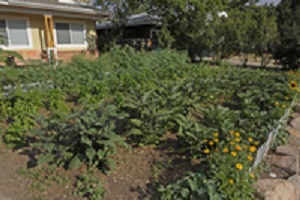 You might have a strip of grass between the street and the sidewalk that’s looking sad, or a backyard that yearns for a garden but you don’t have time. And, gosh, you’d like to be able to meet some of your neighbors. And organic produce is sooo expensive from the grocer down the street. You are a candidate for yardsharing! Community (sometimes called allotment) gardens have traditionally filled that need. But in many places, the converging trends of local food, food security, and economic hardship have resulting in long waiting lists for community garden plots. So creative gardeners are filling that gap using yardsharing. You might have a strip of grass between the street and the sidewalk that’s looking sad, or a backyard that yearns for a garden but you don’t have time. And, gosh, you’d like to be able to meet some of your neighbors. And organic produce is sooo expensive from the grocer down the street. You are a candidate for yardsharing! Community (sometimes called allotment) gardens have traditionally filled that need. But in many places, the converging trends of local food, food security, and economic hardship have resulting in long waiting lists for community garden plots. So creative gardeners are filling that gap using yardsharing.
Yardsharing is the perfect combination of community gardening, local food, slow food, and social networking. Yardsharing has probably always been done on a small scale, but in the last while, it has become a growing (pun intended) trend in North America and Europe. Yard sharing connects someone with space for a garden but no time, ability or inclination to plant one with someone who has time to create a garden but no space – because, for instance, they live in an apartment. In return, the person with the space receives a share of the food the garden produces.
Yardsharing is an arrangement between people to share skills and gardening resources – space, time, strength, tools – in order to grow food as locally as possible, to make neighborhoods resilient, kids healthy and food much cheaper.
Liz McLellan, the founder of Hyper-locavore – Yard Sharing, a free online yardsharing community, goes further in her description. She says, “Yardsharing is an arrangement between people to share skills and gardening resources – space, time, strength, tools – in order to grow food as locally as possible, to make neighborhoods resilient, kids healthy and food much cheaper! The group can be friends, family, neighbors, members of a faith community (or any combination). Sometimes, older people lack stamina and are socially isolated; finding younger people to partner in growing food together works wonderfully for all.” (A hyperlocavore is a person who tries to eat as much food as locally as possible. Growing your own is as local as it gets!)
As McLellan suggests, this simple exchange of land for labor becomes much more than gardening. It is about connecting with your neighbors (including those of different ages and from different socio-economic conditions), reducing our carbon footprint, teaching children about food, community empowerment, and helping others (excess food can be donated to food banks). In short, it helps create sustainable communities.
Victoria, B.C.-based Sharing Backyards notes that “neighborhood” is the operative word in creating an effective yardsharing relationship, stressing that it’s about “location, location, location!”. They and other groups try to link people who are geographically close to each other because “a garden that is close to where the gardener lives is more likely to receive the love and care it needs to thrive.” Joshua Patterson, the founder of Portland Yard Sharing, and one of the movement pioneers, agrees. He advises, “Look for someplace you walk past all the time, someplace you can run to if you need something else for your dinner party. The idea here is to keep it close if possible.”
Getting Started
You can sometimes find a yardsharing partner simply by networking with your neighbors, work colleagues, and members of community groups. Or you can post a sign on bulletin boards at local coffee shops, farmers markets, community centers, food banks, etc. (wherever people gather). There are also a burgeoning number of websites and online groups dedicated to helping neighbors connect in this way. These sites use social networking tools to connect partners and typically have maps where you can list your property for hosting a garden, or post a listing looking for a place to garden.
Planning and a convenient location are key components of a successful yardsharing arrangement.
Once you have located a potential yardsharing partner, you will need to discuss the arrangements. This discussion should include how much land is available and where (to make sure it’s useful garden space), whether chemicals will be used or not, and how much produce the host gets in return for use of the space. (See the list of considerations to the right for more detail.) Trust is a major component of a successful partnership – especially for the property owner, who doesn’t want her yard dug up, then abandoned or polluted – so treat the process as if you were looking for a tenant or roommate arrangement. The folks at Sharing Backyards suggest speaking on the phone first, then meeting for the first time in a public place, perhaps with a friend in tow. You might even want to request (and check) personal references. A written agreement is also a good idea.
Most of the national groups listed here have spawned local yardsharing groups, which help promote the concept, provide guidelines for creating sharing arrangements, and use technology such as online maps to help link people up. If there isn’t already a local group set up in your area, check their websites for details about how to become a partner in their network. You’ll likely find comfort, information, inspiration, and community by doing so.
Growing the Model
So if gardening in one neighbor’s yard works, then why not in several? That’s the model being used in Boulder, Colorado, where Kipp Nash farms more than a dozen neighbor’s yards – including church lawns – as a Neighborhood Supported Agriculture (NSA) operation, based on the Community Supported Agriculture (CSA) model. After yard owners and shareholders receive their produce, surplus from the Community Roots Urban Gardens is sold at the Boulder Farmer’s Market and donated to families in need. Kipp has also created an apprenticeship program to train urban farmers in growing food in their front or back yards, and gives workshops on the NSA model.
Then there is Toronto-based Sarah Nixon whose business My Luscious Backyard involves selling arrangements of flowers that she has grown in five different front and backyards. She started with her own yard, expanded to some friends’ and then dropped off notes to strangers who had large, empty yards. The homeowners get a free flower garden with no effort, and Nixon’s business is blooming, as she cycles from yard to yard and delivers her bouquets to weddings, offices, and stores via bike trailer.
So if you’re a frustrated apartment-dwelling gardener or a homeowner with an expanse of sunny but under-used lawn, find a partner and get growing food, flowers, and community.
* * * *
Yardsharing Basics
After you’ve met a prospective yardsharer, get to know each other; talk about everything, including how you will resolve disputes. Here are some other questions to consider:
Time
- How many months and hours per week will the gardener be able to work?
- On which days of the week and at what time(s)?
Tools
- Do you have tools to share?
- Where will they be stored?
Soil Issues
- Is there grass to be removed and who will do that?
- Who will pay for soil amendments if required?
- Are pesticides allowed and is there room to compost?
Seeds / Transplants
- Who will provide the seeds and/or transplants?
- How will decisions be made about what is to be grown?
Water Considerations
- Is there access to a hose and water?
- Who is responsible for watering and when?
Harvesting
- How will the harvest be shared and to whom?
- Who will do the harvesting and when?
Privacy and Security
- Are children and/or pets allowed in the garden?
- What space can be used? (shed, basement, bathroom)
- Are locks and gates present/necessary?
- Arrange for emergency contact numbers.
Create a garden sharing agreement and have both parties sign it and keep a copy.
Check in with each other regularly as the season unfolds.
Have a harvest festival and invite the neighbors.
Learn More
The Sharing Solution: How to Save Money, Simplify Your Life & Build Community by Janelle Orsi, Attorney and Emily Doskow, Attorney (Nolo, 2009)
Food Not Lawns: How to Turn Your Yard into a Garden And Your Neighborhood into a Community by Heather Coburn Flores (Chelsea Green, 2006)
Wendy Priesnitz is Natural Life’s co-founder and editor, a journalist with over 40 years of experience, and the author of 13 books.
|