Celebrate the Winter Solstice With Your Family
by Wendy Priesnitz
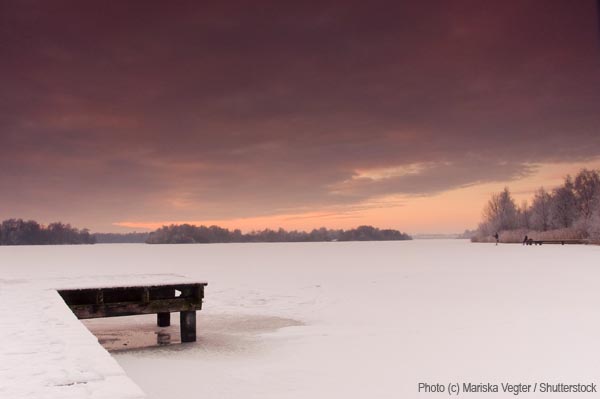
The winter solstice, also known as midwinter, marks the day with the shortest period of daylight and the longest night of the year. The term solstice means “sun stands still” and, indeed, this is a time when the sun appears to halt in its apparent journey across the sky. Since winter is the season of darkness and bad weather in cold climates, the coming of longer and brighter days after the winter solstice has traditionally inspired festivities.
Solstice celebrations can attune our families to Nature’s cycles, while helping children learn some basic science. In the northern hemisphere, the winter solstice precedes Christmas. So, if you don’t celebrate that holiday, it can provide an alternative celebration to share with extended family and friends who do.
Christmas and many other religious holy days celebrated by people around the world are linked in some way to the winter solstice and have ancient roots in pagan celebrations.
The Roman feast of Saturnalia, honoring the god Saturn, was a week-long feast that included the observance of the winter solstice. Parties took place and houses were decorated with boughs of laurel and evergreen trees, and lamps remained lit to ward off the spirits of darkness. Much visiting took place, along with gift giving, and processions of revelers took to the streets. Pagan Scandinavia celebrated a winter festival called Yule or jul. Many of our Christmas traditions were inherited from these celebrations and you can incorporate them into your own solstice celebrations...along with creating your own personal traditions.
Planning Your Celebration
First of all, decide whether your solstice celebration will be focused on the exact time of the solstice, or at twilight, later in the evening or during the day. That, and other details, will, of course, depend upon the ages of the attendees, the day of the week on which the solstice falls, and whether or not attendees work during the day. Then, decide on whether you’ll be outdoors – in a park or your backyard, for instance – or inside your home.
Sharing food is the focal point of many celebrations, the solstice included. You might want to prepare a feast of favorite foods (or host a pot luck), topped off with a cake decorated with a sun. One family we know puts candles on the cake and each family member lights one while making a wish. Then the whole family blows them out together. (For good indoor air quality, I encourage you to use beeswax candles.)
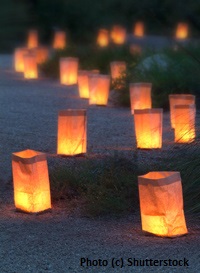 Because they symbolize light, candles are important to winter solstice celebrations. You can decorate outdoors by making luminaries (luminaria) – or candle holders – and spacing them about a foot apart…along the sidewalk to your home, for instance. Place candles inside dollar store glass holders or canning jars, punch decorative patterns in tin cans, or use flat-bottomed paper bags. If you use paper bags, fold over an inch or so of the top to help hold their shape and place a few cups of sand inside to weigh them down. Twist a votive candle into the sand in the middle of each bag and light the candles as dusk falls. (Don’t use these luminaries indoors!) Because they symbolize light, candles are important to winter solstice celebrations. You can decorate outdoors by making luminaries (luminaria) – or candle holders – and spacing them about a foot apart…along the sidewalk to your home, for instance. Place candles inside dollar store glass holders or canning jars, punch decorative patterns in tin cans, or use flat-bottomed paper bags. If you use paper bags, fold over an inch or so of the top to help hold their shape and place a few cups of sand inside to weigh them down. Twist a votive candle into the sand in the middle of each bag and light the candles as dusk falls. (Don’t use these luminaries indoors!)
Create your own family tradition by gathering in a circle around candles. Each person can light a candle and talk about something they’re grateful for or something they wish for another person in the coming year. Or you could tell or read legends about the winter solstice, or sing appropriate songs. (You might want to record this part of your party for future enjoyment.) You would, of course, adjust the ceremony based on the ages of any children involved.
Feeding our friends in Nature can be a part of a solstice celebration too. You can erect a bird feeder or fill an existing one, or venture into a neighboring forest and create a ceremony around placing seeds or nuts in a place where wild animals will find them. You might want to talk about how this connects us to and makes us grateful for our place in Nature.
Evergreen trees are a traditional part of Christmas celebrations, and you can include one in your solstice plans too. Since solstice is a celebration of Nature and of light and living, your Yule tree should, ideally, be a living one. You might want to adopt a tree – on your property, in a park, or a forest – and decorate it with food for birds and small animals; start a family tradition and visit it every year, keeping a photographic record of how it and your family are changing.
You can also purchase a tree in a pot to plant in the ground later. Each family member should add an ornament that is meaningful to them and many families enjoy limiting the decorations to representations of the sun in honor of the solstice. (Moons and stars are other suitable decorations.)
Yule wreaths and logs are other familiar aspects of winter solstice celebrations. Wreaths can represent both the family circle and the cycle of seasons. Making one from natural materials that you collect can be a meaningful and enjoyable family activity. While you work, you can discuss the meaning of the various customs, or each person can share something they appreciate about each other or about winter.
If you have a fireplace or a space outdoors to light a bonfire, you can gather around it in the dark and tell stories. One ancient tradition has each family member throwing a holly sprig onto the fire to usher out the old year, then saving some of the charred wood to start next year’s Yule log burning.
There is a long-standing tradition of gift giving at the Winter Solstice. (Is it beginning to sound a lot like Christmas?) You could have a unique and Nature-themed gift for each person at your celebration. Or you could dispense with gifts altogether and just enjoy the companionship.
It’s always good to end your solstice celebration by holding hands in a circle focusing on the joys of friendship and family. However you mark the winter solstice, you will be part of a memorable and ancient tradition.
Wendy Priesnitz is Natural Life's Editor. She is also the author of 13 books, and has over 40 years of experience as a writer/editor and a lifetime of experience searching for alternatives to conventional Christmas celebrations.
|