The Art of Timber Framing
by Rolf Priesnitz
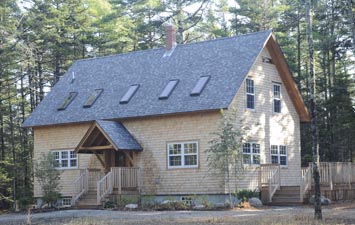
Photo courtesy Sweet Timber Frames |
Timber framing, or post and beam as it’s also known, is a traditional style of construction that is making a comeback. That’s because it creates buildings that are strong, sustainable, and full of character. In Europe and North America, there are many timber frame structures – homes, churches, and barns – that are centuries old. We’ve even heard of a timber frame temple in Japan that was apparently built 1300 years ago.
Timber framing is a simple but elegant building system consisting of large wooden posts and beams that fit together with traditional interlocking mortise and tenon joinery and are secured with wooden pegs rather than nails. The pegs act as a locking mechanism with the joints of the timbers, so that when the frame of the house is assembled on-site, the only element holding the entire structure together is wood. Once the structure is assembled, the walls are completed by in-filling between the wooden structural members with natural building materials such as straw, cob, cordwood or planed wood, or by wrapping the structure with insulation and siding, which creates a tight building envelope.
One of the major attractions of timber frame construction is the considerable charm of a traditional, hand-made building. John Sweet, owner of Sweet Timber Frames, which built the house pictured in this article, describes a timber frame as “a unique wooden sculpture.”
Here is a link to a PDF of the complete article, as it was published in Natural Life Magazine in 2009.
Rolf Priesnitz is Natural Life magazine's co-founder and Publisher. He also has over 45 years of experience in the construction industry.
|