Home Grown Kids
by Belinda Moore
The Snack Patch
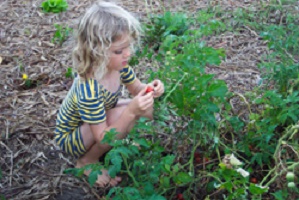 When we are learning about plants, like most other subjects, regular observation and participation is the best teacher. For a child (and for most of us adults) there is no better incentive to garden than harvesting food to snack upon! When we are learning about plants, like most other subjects, regular observation and participation is the best teacher. For a child (and for most of us adults) there is no better incentive to garden than harvesting food to snack upon!
When creating a snack patch for children, consider creating a low, narrow garden bed or use pots so that they can reach to sow seeds, water plants, remove weeds and eat their crops. Garden beds can be made from recycled objects quite inexpensively. Starting with a small area or a few pots, even one planter box is enough to assist the child in developing an understanding of producing food from seed to table. Other useful items include small garden tools, a watering can and a basket or bucket to collect produce. Hats, garden gloves and boots offer protection for gardeners of all ages.
Examples of food plants which are quite easy to grow and fabulous to snack on include snow peas, green beans (climbing or bush varieties), cherry tomatoes (yellow pear or red…both are delicious), nasturtiums and gooseberries. These all tend to ramble and require at least a little space and usually staking as well.
Because sweet corn is tall and a heavy feeder, it is best suited to a garden bed or individual pot. It is delicious to eat raw, though, and some varieties grow to an impressive three meters in height!
Strawberries, the many varieties of mint (including chocolate mint), baby carrots and radishes are all very tasty and suit a variety of growing conditions. Children who normally don’t like to eat spicy foods will often nibble a young, freshly picked radish from their garden.
Passionfruit vines ramble along fences or trellises, and even up trees. Our children love to “pop” these sweet baubles and eat the pulp while playing in the garden.
Sprouts are another snackable crop, which suit just about any gardener, anywhere. Information on growing them is widely available in books, on the Internet and on packets of sprouting seeds often found in health food stores.
A lovely little bush on which most children love to snack is Sweet Leaf (Sauropus androgynus F. Euphorbiaceae) or “tropical asparagus,” a tropical plant that is very high in nutrients. Its young leaves taste like green peas, but the plant is much more prolific and easier to grow than peas. Sweet Leaf will do well in a large pot, to be moved indoors in temperate and colder climates as required.
While working in their gardens, discuss with children what is safe to eat. You can make labels together from any water-resistant material such as pieces cut from plastic container or popsicle sticks to identify “their” plants.
Washing produce is recommended to remove soil and surface microbes. I hope that the use of all pesticide sprays is avoided in your home garden, so at least their toxic residues are not a concern here.
The produce from a snack patch can be eaten right away or brought inside for a salad or other meal. Fresh, home grown, organic food is brighter, crunchier, tastier and most full of nutrition the minute it’s picked. That makes it the highest quality of all snack foods available.
Many natural therapists attest that food has a vibration or energy, which is at its peak upon harvest, compared to food that has been handled, transported, stored, processed, etc. Therefore, it is said that the freshest of garden snacks feed the soul as well as the body. You may or may not subscribe to this theory, but it’s another exciting benefit of snacking from the patch if it’s true!
Having their own edible garden encourages children to try foods, especially raw foods that they might not eat at the table. Right from toddlerhood, our six children have been provided with a small bowl of fresh-picked goodies to nibble upon while watching me work in the garden. They’ve progressed to helping harvest the ripe berries and pods themselves and then to planting seeds with me, preparing beds, labeling specific plants and all the other related gardening and kitchen tasks. This is a normal part of our family life, as basic as going to the store, opening the refrigerator and rummaging in the pantry. But it is intensely more real, healthy and important for them and for the Planet.
Belinda Moore is a home-educating mother of six. She landed in tropical north Queensland, Australia quite by chance and enjoys the simplicity there, compared to her time in cities. Growing things has been a lifelong passion, no matter where she has lived. Other passions include her family, homeschooling advocacy, writing, sewing and environmental issues. The photo that appears with this article is of Belinda's daughter Abbey picking a snack from her family's garden.
|