Staying Green While Going Lean
12 Steps to Save Money and Energy
 There’s no need to forget your commitment to green living just because the economy seems to be in crisis. Nor do you need to suffer! In fact, a green lifestyle can save your family money. And it can even make you healthier. Here are some of the most important and inexpensive ways to conserve energy and save money at the same time. There’s no need to forget your commitment to green living just because the economy seems to be in crisis. Nor do you need to suffer! In fact, a green lifestyle can save your family money. And it can even make you healthier. Here are some of the most important and inexpensive ways to conserve energy and save money at the same time.
1. Setting your thermostat wisely is probably the simplest and least expensive way to save energy. A programmable model is a good investment, saving you up to 15 percent on your heating bill. But even if you have the regular kind, you can still manually regulate the temperature when you’re not home. Adjusting temperatures five to eight degrees F (down in winter, up in summer) can help save energy if you’re going to be away from home for several hours. Even when you’re home in winter, you can add another blanket at night and wear a sweater during the day.
2. Lower water heater temperature to 120 degrees F (49C); any higher than that risks scalding anyway. For each 10 degrees F reduction in water temperature, you can save between three and five percent in energy costs.
3. Insulate your water heater. Unless your water heater’s storage tank is already well-insulated, (a tank that’s warm to the touch needs more insulation), adding insulation to it can reduce standby heat losses by 25 to 45 percent and save up to ten percent in water heating costs. You can buy an easy-to-install kit at a hardware store; it will pay for itself in about a year.
4. Sealing large air leaks is another simple and inexpensive way to save energy and money, but it does take some effort. According to Natural Resources Canada, air leaks can bleed as much warm air from your house as an open window would – a big open window: In a pre-1945 house, the air leaks can add up to the equivalent of a hole in your wall 21 inches in diameter and, in a modern conventional home, 14 inches. Finding the leaks is easy: A feather or a piece of tissue held to the baseboards, window frames, etc. on a cold day will quickly show you the drafts. Weatherstrip and caulk windows, doors, electrical outlets and other openings, then seal baseboards, ducts, electrical outlets and fireplaces. Heat-shrinking film is a good way to winterize single-pane windows. If your house’s attic is accessible, batts of insulation can be added relatively easily and inexpensively.
5. Install a low-flow shower head. The U.S. Environmental Protection Agency (EPA) notes that showers use about 17 percent of residential hot water use, totaling 1.2 trillion gallons per year. Faucet aerators are another helpful tool for saving water.
6. Wash your clothes in cold water. The average household does 400 loads of laundry a year. And about 90 percent of the energy used is for heating the water. Unless you’re dealing with oily stains, the warm or cold water setting on your machine will generally do a good job of cleaning your clothes. Switching your temperature setting from hot to warm can cut a load’s energy use in half. And it will help your clothes last longer too.
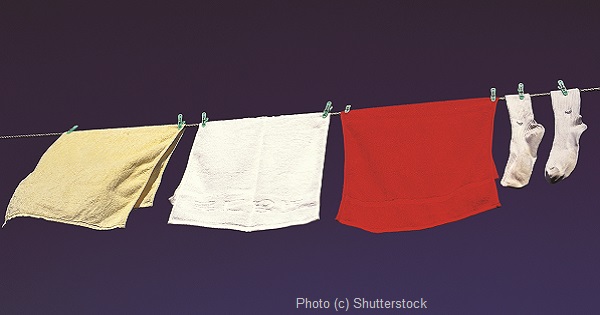
7. Hang your laundry out to dry. Your clothes dryer is second only to the refrigerator in its use of energy. So by drying your clothes outside on a clothesline – even if it’s only for part of the time – you will save energy and money.
8. Eat more local veggies (and less meat and processed food), save money, reduce your environmental footprint and be healthier. According to the USDA, the weighted average price for fresh vegetables is about 15 percent of the price per pound of beef. A recent United Nations report said that 18 percent of greenhouse gases come from animal production. And then there is the environmental and economic cost of transporting food long distances. The negative effects multiply when you eat prepackaged foods, so learn how to make as many meals as possible from scratch.
9. Grow your own, organically. You can’t get more local than food grown in your backyard. Gardening protects you from spikes in food prices, particularly if you focus on perennials and on heirloom varieties that you pollinate yourself.
10. Turn off lights you don’t need. Just doing that can save 1,600 tons of carbon and a few hundred dollars a year. If those lights use LED bulbs, you’ll save even more.
11. Walk or bike whenever possible. We hear a lot about how people, especially in North America, need their vehicles because of the long distances they must travel. However, in the U.S., 40 percent of urban trips are of two miles or less. Cycling or walking is an inexpensive, healthy and enviro-friendly alternative for those trips. And, if you live in a city, you might be able to get rid of your car altogether and use transit for longer distances.
12. Readjust your work hours or work at home. Going to the office for four ten-hour days instead of five eight-hour days can save a bundle on transportation costs, meals and other work day expenses, as well as reduce your carbon emissions. Working at home for some or all of the time reaps even more benefits.
No, there's no rocket science here! We all know about these things, but most of us don't implement them in our lives. So choose one change to make each month until you have firmly integrated it into your family's lifestyle. You'll save money, protect the environment, and feel healthier.
|