From the Editor's Desk
The Big Picture Looks Good
By Wendy Priesnitz
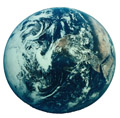 Standing in line at the local farmers’ market the other day, a woman remarked that she was having to cut back on the amount of organic food she was buying due to the tough economy, so she was picking certain organic products and saving money by going back to conventional in many food categories. Organic is an expensive luxury, she said. Actually, I responded, I see buying organic as an investment in the bigger picture. Her turn came to pay for her carrots and she moved on, so I was unable to elaborate on that bigger picture. Standing in line at the local farmers’ market the other day, a woman remarked that she was having to cut back on the amount of organic food she was buying due to the tough economy, so she was picking certain organic products and saving money by going back to conventional in many food categories. Organic is an expensive luxury, she said. Actually, I responded, I see buying organic as an investment in the bigger picture. Her turn came to pay for her carrots and she moved on, so I was unable to elaborate on that bigger picture.
A few days later, a Natural Life subscriber wrote to complain about the increase in the number of articles about children and education. She is a retired person, she explained, and has no interest in educational matters – just in the environment. I explained that education and the environment are intertwined, that they are integral parts of the big picture.
That big, holistic picture is increasingly important to understand. The retired reader should be interested in education because how we train nurses today will affect the quality of her old age tomorrow. In the same way, buying organic – especially local organic such as I was seeking at the farmers’ market – is about much more than keeping pesticides out of our bodies and therefore staying healthy. It is also about supporting a system of sustainable agriculture that protects soil health, species diversity and water supplies; helps combat climate change; enhances local economies; and promotes community development. To use another example, we cannot create a truly democratic, sustainable society in harmony with the balance of Nature by making children and young people attend schools created to serve the Industrial Revolution. As educational philosopher and writer Ron Miller points out in his book The Self Organizing Revolution, molding children into compliant citizens and productive workers “is a violation of Nature no less outrageous than the destruction of old growth forests.”
This is sometimes referred to as “systems thinking,” a framework based on the belief that the component parts of a system can best be understood (and its problems solved) in the context of relationships with each other, rather than in isolation. Systems thinking is the basis of permaculture, which is described in an article in this issue. And I’ve recently become acquainted with an exciting twist on the idea called “financial permaculture,” which is a whole system design for a zero waste economy that cares for both the earth and its people.
We’re seeing the old systems collapse regularly now under their own unsustainable weight. The two most obvious are economic and ecological. But our educational system is not far behind; in fact, some people – myself included – feel the latter has already imploded. The challenge for those of us living through this time of rapid multi-system failure is to see the opportunities for regeneration amidst the panic of those who benefitted from the old way of running things. Natural Life Magazine has, since 1976, been illuminating the big picture, pointing out the connections and describing the new systems that can replace the old. So, in spite of the temporary, short-term pain as the greed-based dinosaur dies, we’re excited about the future because it looks a lot greener and more sustainable. There has never been a time when making life-based choices was more important. Let’s keep the momentum going!
Wendy Priesnitz is the co-founder and editor of Natural Life Magazine, where an earlier version of this appeared as an editorial in 2009. She is also the author of 13 books and a contributor to many more.
|