Tear Up Your Turf
(And Plant Veggies)
by Wendy Priesnitz
Tired of cutting the grass? Want more room to grow food? Worried about the pollution from your small engine lawnmower? Then tear up your turf!
Lawns are monocultures that use ten times as many chemicals per acre as industrial farmland – chemicals that pollute groundwater and contribute to global warming. Then there is that power mower, which pollutes more than your car. And the water...the lawns in the United States alone consume around 270 billion gallons of water a week – enough to water 81 million acres of organic vegetables for a whole summer.
Many people are replacing their front lawns with native plant gardens and other landscaping that fosters biodiversity, but not as many ecological gardeners consider growing food in these spaces. That’s unfortunate, because the space occupied by the grass that surrounds your home could produce enough vegetables to feed your family, with enough space left over for a bit of recreational turf (maintained with a push mower, of course). While it requires more work than the relatively low-maintenance established native plant garden, growing food makes a strong social statement and is a positive step towards healing our planet’s many ills.
In her book Food Not Lawns: How to Turn Your Yard into a Garden And Your Neighborhood into a Community, Heather Coburn traces the idea of lawns back to the 18th century when French aristocrats planted the agricultural fields around their estates to grass, to send the message that they had more land than they needed and could therefore afford to waste some. Of course, the French peasants were starving for lack of available land and the French Revolution was the result.
"Planting a garden sounds pretty benign, I know, but in fact it’s one of the most powerful things an individual can do to reduce your carbon footprint."
~ Michael Pollan |
Writing in the New York Times, author Michael Pollan (In Defense of Food: An Eater's Manifesto and The Omnivore's Dilemma: A Natural History of Four Meals), suggested that this is one of the ways individuals can contribute to solving the global warming crisis: “Rip out your lawn, if you have one, and if you don’t, look into getting a plot in a community garden. Measured against the problem we face, planting a garden sounds pretty benign, I know, but in fact it’s one of the most powerful things an individual can do to reduce your carbon footprint...sure, but more important, to reduce your sense of dependence and dividedness: to change the cheap-energy mind.”
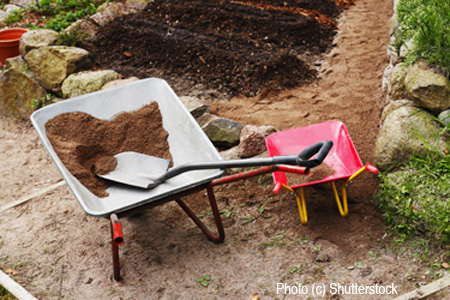
It’s not difficult to get started. You might want to transition from full lawn to full garden, reclaiming a bit of grass each year. There are a couple of methods for removing grass. If your lawn is healthy and you want quick results but don’t mind the work involved, you can rent a sod cutter to slice out strips of grass. Roll the sod up and use it elsewhere, give it away to neighbors or advertise it for sale on craigslist.org or a local bulletin board. You’ll probably have to add a layer of topsoil and compost, because the soil under a lawn will be compacted and not rich enough to support food plants.
The previous fall, you could use the “lasagne” or sheet mulch method. Put down a thick layer of cardboard and/or newspaper and then pile six inches or more of compost, clippings, mulch and topsoil on top. The grass underneath will die off and decompose and you’ll be ready to add more topsoil and compost to plant your veggies the next spring. Some people prefer to use sheets of black plastic, which has to be removed once the grass dies, but we prefer to avoid plastic.
Natural Life Magazine's organic gardening article index will provide you with access to information about how to make your property lush with food, no matter how small or large, or whether you live in the city, the suburbs, or in the country.
So if you want to reduce pollution, improve the quality of your family’s diet, increase local food security, beautify your surroundings, build community, improve your mental and physical health, and change the world, tear up that turf.
Author Wendy Priesnitz is the Editor of Natural Life Magazine and a journalist with over 45 years of experience. She has also authored 13 books.
|