|
10 Steps to Pesticide-Free Lawn Care
So you want to avoid using chemical pesticides, but still want a healthy lawn?
Here are some steps to ecological lawn care.
We are all familiar with Reduce Re-use and Recycle. Now we must Re-think too. Let's re-think our expectations of lawns. The “golf-course syndrome” causes us to have unrealistic ideals of a 100 percent weed-free lawn. (What will we want next?: a cloud-free sky?) Let's lose the toxic, chemical pesticides and accept occasional weeds as a sign of a normal, non-toxic lawn. Quick-fix chemical solutions carry a much-too-heavy health and environmental price. Prevention is better than cure. Try these ten easy steps to prove it.
Routine Care
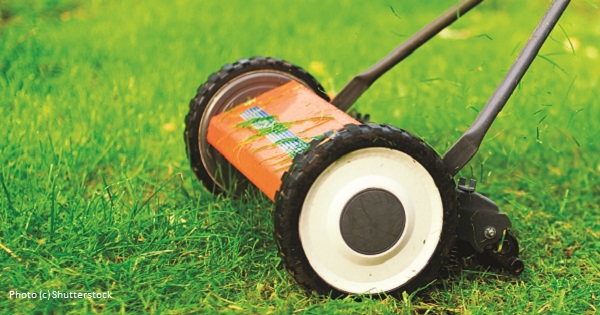
1. Mow high. If you only apply one of these ten steps this year, let this be it! A lawn mowed high discourages weed and insect invasion. Set cutting height at 2.5 or three inches. Never scalp your lawn. Long grass blades stay much stronger, prevent weeds from sprouting, shade the roots and prevent drying of soil, and encourage longer, healthier roots. Mow regularly, never removing more than one-third of the leaf length at a time. use a hand mower and keep cutting blades sharp. This avoids tearing grass and making it susceptible to disease. Don't mow wet grass, and mow in the evening or on cloudy days.
2. Mulch clippings. Leave clippings on the lawn as mulch. This reduces the need for organic fertilizer by 30 percent. In wet periods, or if grass was very long, compost clippings instead. If you are detoxifying a previously chemically-treated lawn, don't mulch for a year or two or thatch may build up.
3. Water deeply. Lawns need about one inch of water once a week, applied slowly during dry spells, preferably before 8 AM. Put a can under the sprinkler and time how long it takes for an inch to accumulate. That's how long to allow before moving the sprinkler each time. Frequent, light sprinklings waste water and encourage shallow roots.
4. Control weeds and insects ecologically. A healthy, well-cared for lawn out competes most weeds. Check often for stressed areas like bare spots (they invite weed invasion) and treat promptly by eliminating the cause (such as heavy traffic). Overseed when necessary (see step 9.) Remove occasional weeds by hand. For persistent weed problems, get your soil professionally analyzed: ideal soil pH is six to seven. Add lime or sulfur to modify pH. This increases availability of plant nutrients and promotes beneficial micro-organisms. Dishwashing soap and water sprayed in warm weather is effective against most insect pests.
Seasonal Care
5. Rake. Use a rake to gently remove thatch (compacted layer of clippings and dead grass which prevents water from percolating to the roots). Do this in late spring or early summer. Don't act too soon after the thaw when the grass still feels spongy, or else the roots will be damaged, but don't wait so late that heavy seeder weeds have germinated.
6. Fertilize in spring. Many people will find this step unnecessary, and some experts recommend fall fertilization only. But if you want a really strong and pest-resistant lawn, apply (in mid-May) slow-release, granular, organic fertilizer. Don't use highly-soluble chemical ones, which leach natural soil nutrients, stress the soil and grass, and may induce disease outbreaks. Organic fertilizers include compost, manure, processed sewage, top dressing, rock mineral fertilizer, bone meal, blood meal and kelp.
7. Aerate. Aeration is the process of removing small plugs of earth to decrease soil compaction, increase water retention capacities, and increase air circulation to roots. It is best done in June (or the fall) to avoid times when heavy seeder weeds germinate and may grow in the plug holes. You can rent an aerator from a nursery or tool rental store.
8. Top-dress with compost. This is best done with aeration, but it can be done any time between mid-June and the end of August. If you don't have your own compost heap, buy composted cow or sheep manure. Broadcast it at 100 pounds per 1000 square feet.
9. Overseed. This gives excellent results when combined with aeration and top-dressing. Stressed areas and bare patches invite weed invasion. Loosen soil, spread compost or peat moss, sprinkle grass seeds of a hardy species, press in and water.
10. Fertilize in fall. This is an essential step. We must feed the soil. If you only fertilize once, fall is best. Use one of the organic fertilizers mentioned in Step 6. Your lawn will have a head start next season.
|