Natural Burial:
The Ultimate in Recycling
by Wendy Priesnitz
When a loved one dies, environmental issues may not be top of mind for grieving family and friends. However, the average funeral and burial are very un-green.
Embalming fluid is made with formaldehyde, which is a carcinogen. Most traditional caskets are made from formaldehyde-glued chipboard covered in a thin veneer. Handles are usually plastic, designed to look like brass. Those substances pollute during manufacture and after burial. More expensive caskets are manufactured using exotic or endangered species of wood. Many cemeteries have few or no trees and often experience drainage and ground water pollution problems. In others, the grounds have been destroyed through the use of herbicides.
Most cemeteries require caskets to be buried in concrete vaults. Originally developed in the 18th century to deter grave robbers, vaults are sold today to keep the ground from sinking and markers from moving. In the U.S. alone, these vaults cause 1.6 million tons of reinforced concrete to be buried annually.
Cremation was long considered more environmentally friendly than burial, but its use of fossil fuels is problematic. The average cremation produces about 50kg of carbon dioxide and emits dioxin, hydrochloric acid, hydrofluoric acid, sulphur dioxide and mercury from dental fillings. Cremations have been reported to be responsible for 16 percent of mercury released into the air in the U.K.
Fortunately, there is a simple, affordable and environmentally-friendly alternative, which is, ironically, the traditional way of treating departed loves ones. Since we first reported on the natural burial phenomenon in 1994, the awareness of alternatives has increased manyfold. Groups working on awareness and certification of providers have formed in Europe, the U.S., and Canada. Natural or green burial has become popular in the UK, with close to 300 eco-cemeteries. There are also close to 100 green cemeteries across the USA, and a handful in Canada.
What is a Natural Burial?
A green or natural burial takes place in a protected green space. No embalming fluid is used (nor is it necessary – there is no evidence that embalming provides public health benefits and that, if necessary, a body can be preserved for a few days in a cooler or by using dry ice). Interment is done in a biodegradable casket made from cardboard or wicker, or directly in the ground wrapped in a simple cotton shroud or a favorite blanket, and no concrete vaults are used.
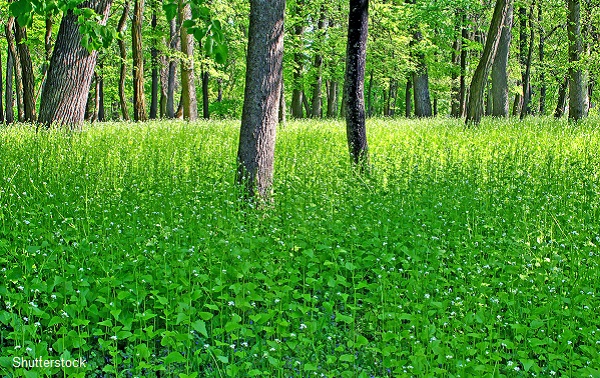
A natural burial site may be planted with native trees, shrubs, and wildflowers. Water is not wasted, nor are herbicides used. To encourage land preservation, most green cemeteries grant conservation easements to preserve the area in perpetuity. Some green cemeteries keep track of graves using GPS and mark them with simple rocks and plantings; other prefer a centralized memorial.
Since, especially in urban areas, the amount of land required for cemeteries is limited, the reuse of grave space is coming into consideration. Although the idea has still to catch on in North America, it was popular practice in 19th century Europe, where gravesites were leased for ten to 15 years, or long enough for a body to decay. After that, the space was reused for future burials.
It might be legal in your area to bypass the cemetery altogether...or not. While some jurisdictions prohibit disposal of human remains anywhere other than in a cemetery, many others do not have such restrictions and, in fact, allow family cemetery plots. Check with your state/province and municipal government.
Composting Human Remains
While a natural burial as described above will eventually result in decayed remains, a couple of organizations are encouraging the return of human remains to dirt via composting.
The Good Green Death Project, based in Ontario, Canada, describes how that end-of-life option would work: “The shroud-wrapped body is placed in an individual, enclosed vessel with supportive, natural materials such as straw, sawdust and alfalfa pellets, and monitored for temperature and moisture. The process takes about thirty days to gently return the body to earth, which can be used to plant a memorial tree, or scattered at the base of a shared family tree.” In mid-2019, the state of Washington in the USA became the first and, at the time, only location in the world to legalize this process, which is being called “recomposition.” That landmark came about due to the work of architect and green death researcher Katrina Spade, who hopes to offer the alternative through her company Recompose.
Home Funerals
Home funerals are another way by which environmentally conscious families can avoid compromising their values. A simple service at home provides an opportunity for cost savings and allows family members to more easily personalize end-of-life rituals. Just as the birthing process has evolved away from something that was entirely controlled by the medical profession, home funeral providers are much like midwives, assisting people in taking matters into their own hands and having simple services that are appropriate for their own particular needs.
In fact, a whole new profession has arisen recently, where death midwives or death doulas as they are sometimes called, offer holistic, non-medical, emotional, spiritual, and practical support for the dying and their families. A number of organizations are offering training for those interested in offering end-of-life doula services.
For those who still prefer the idea of cremation, it is also becoming a bit greener. The newer cremation burners incinerate many pollutants and crematoriums are being encouraged to reduce their carbon footprints by participating in carbon offset programs. The Mayo Clinic in the US has created an alternative to flame-based cremation that uses water and potassium hydroxide to reduce the body to its basic element of bone ash. Those who want to bury cremated remains can purchase biodegradable urns. Some people also opt to add ashes to balls that are dropped onto memorial ocean reef sites.
Learn More
Green Burial Council
Green Burial Society of Canada
Natural Death Centre UK
Good Green Death Project
The Green Burial Guidebook: Everything You Need to Plan an Affordable, Environmentally Friendly Burial by Elizabeth Fournier (New World Library, 2018)
Grave Matters by Mark Harris (Scribner, 2007)
The Natural Death Handbook by Josefine Speyer (Rider & Co, 2003)
Dealing Creatively with Death, a Manual of Death Education and Simple Burial by Earnest Morgan (Upper Access, 2001)
Coming to Rest: A Guide to Caring for Our Own Dead, an Alternative to the Commercial Funeral by Julie Wiskind (Dovetail, 1998)
Caring for the Dead: Your Final Act of Love by Lisa Carlson (Upper Access, 1997)
Wendy Priesnitz is the editor of Natural Life Magazine, a writer, and journalist with more than 45 years of experience. She has also authored 13 books. This article was first published in 2008 and last updated in 2019.
|