|
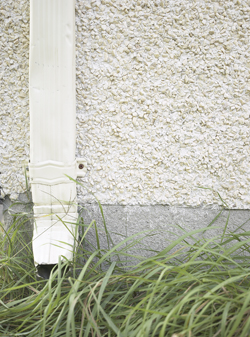 Many municipalities are requiring homeowners to disconnect their downspouts from the municipal sewer systems for environmental reasons. Even if your downspout empties onto your lawn, redirecting it into a “bog” or wetland garden is an effective water conservation method and an alternative to a rain barrel as a way to capture rainwater for your garden. Many municipalities are requiring homeowners to disconnect their downspouts from the municipal sewer systems for environmental reasons. Even if your downspout empties onto your lawn, redirecting it into a “bog” or wetland garden is an effective water conservation method and an alternative to a rain barrel as a way to capture rainwater for your garden.
The many impermeable surfaces (roads, sidewalks, driveways, patios, buildings) in cities prevent rainwater from being absorbed into the land to recharge groundwater. Instead, rainwater and snowmelt run off these surfaces into sewers, picking up dirt, oils, pesticides and other pollutants along the way. Then, the water entering storm sewers flows out in a concentrated and often polluted rush at single points along nearby waterways. This rush of water can cause erosion, wash away fish-spawning beds and cause other damage to the waterways’ ecology.
By re-directing storm water from your roof to your garden, you can reduce that impact. Besides, rainwater is healthier than municipally-treated water for our gardens, as some plants are sensitive to chlorine and other additives. Create a native plant wetland garden at the end of your downspout and you’ll virtually eliminate the need for watering, fertilizing, and pesticides.
Your garden will become both an attraction for pollinating insects like butterflies and bees, as well as a thing of beauty. Some of the most beautiful and unusual of our native plants thrive in the wet, acidic conditions that characterize a bog. Once completed, your bog garden will look like any other but you will only need to water it during the most severe droughts. Here’s how to get started:
Outline the shape of your downspout garden and dig it out to a depth of one meter (3.28 feet.) The bottom of the plot should slope slightly away from the foundation of your house to direct excess moisture into your garden and/or lawn.
Line the plot with heavy plastic and poke a few holes several centimeters (three-quarters of an inch)above the bottom to allow excess water to drain out. (A bog is characterized by poor drainage, so don’t go overboard.)
Bog plants like acidic soil, so line the hole with coir (a more ecologically sound peat moss alternative) and refill with a mixture of the excavated soil and other organic materials you have on hand (compost, pine needles.) Mound the soil somewhat to allow for settling. Wet the mix thoroughly.
Cut your downspout and attach an elbow and, if necessary, an extension, to direct rainwater into your garden and away from your house’s foundation. Most hardware stores carry an array of downspout extensions.
Add your plants and get ready to enjoy a beautiful and unusual garden.
What to Plant
Native plants will thrive without further inputs once established in the right location. If you’re not sure which plants are suitable for bog conditions in your location, consult your provincial or state organization concerned with native plants and biodiversity. Links to groups across Canada and the US, and around the world can be found on the Native Plants Crossroads website (see below.)
Many garden nurseries and centers sell native plants. Before you buy, ask about the source of the plants. The preferred sources are seeds or cuttings. Avoid pre-packaged wildflower seed mixes because they often contain many alien, invasive species.
Never take plants from the wild. Collect seeds from the wild only with the landowner’s permission. Take a few seeds from many plants, rather than all the seeds from a few.
You can also try rescuing native plants from being destroyed by land development and roadside maintenance. Before attempting rescue, seek permission of the relevant landowner.
Many plants do not transplant well; many orchid species, for example, have formed a symbiotic relationship with mychorrizal fungi that cannot be immediately duplicated in a new site. When digging up the plants you are trying to rescue, make sure you get the entire root ball and sufficient soil. If possible, try to plan plant rescues for cooler, overcast Autumn days.
This article was prepared using material supplied by the North American Native Plant Society. Photos (c) Shutterstock Images.
|
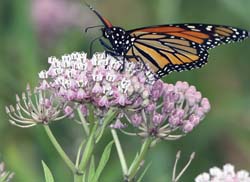
Swamp Milkweed (Asclepias incarnata) is a good choice for a wetland garden in many locations. It is considered native to Manitoba, Quebec and Nova Scotia; from New England south to Georgia; west to Louisiana and Texas; and north to North Dakota. Its showy pink flowers bloom all summer and it grows from 70 cm (2 feet) to 130 cm (4 feet) high.
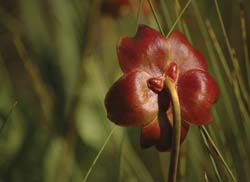
Pitcher Plant (Sarracenia purpurea) is the provincial flower of Newfoundland and Labrador. A carnivorous plant, its nectar attracts ants, wasps, bees, butterflies and moths. Beetles and spiders also visit the plants to prey on other insects. It requires full sun and is native from Florida to Mississippi, north to Virginia and Maryland, west to Iowa and north to Manitoba, Hudson Bay and Labrador.
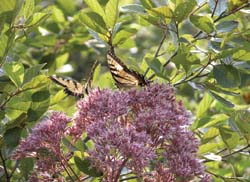
Spotted Joe Pye Weed (Eupatorium maculatum) can grow from 60 cm (two feet) to 1.8 meters (six feet) or taller. It is native from Newfoundland to Montana; south to the North Carolina mountains; and in Kentucky, Louisiana, Kansas and New Mexico. It also grows well in most of Canada, including the Maritimes, the U.S. northeast, mid-Atlantic, southeast, midwest, northwest and Rocky Mountain areas.
|