|
Greening The Easter Bunny
by Wendy Priesnitz
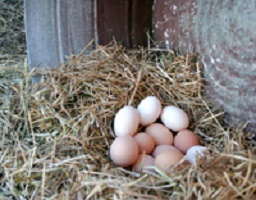
photo (c) Lee O'Dell/Shutterstock |
Easter is the most important religious feast of the Christian year. But as with many other Christian events, the celebration of Easter extends beyond the church. Ancient civilizations celebrated Spring by feasting with family and friends, and pagan fertility traditions and symbols have, over the centuries, become part of Easter celebrations.
However, for many people today, it is just another commercial opportunity, benefiting greeting card and candy manufacturers. Unfortunately, most families’ Easter celebrations are also orgies of excess packaging and unhealthy eating, tempting some to try to ignore it altogether. But the season is fun for many children and invites those of us in the northern hemisphere to be optimistic about life and renewal, a sentiment that is much needed these days. In that spirit, here are some thoughts about creating a greener, healthier and more meaningful Easter, whether or not you celebrate the religious aspect of the occasion.
Eggs have been symbols of Spring for perhaps as long as our civilization has been around. Ancient Romans and Greeks used eggs as symbols of fertility, rebirth and abundance. Eggs were also solar symbols and played a part in the festivals of various resurrected gods. The tradition of giving a chocolate egg to mark the end of Lent dates back to at least the 19th century. Giving candy eggs at Easter might seem like a harmless extension of that tradition, but it’s one that can harm the health of both children and the environment.
The Problem with Easter Eggs
Some FDA-approved food dyes are made from coal tar and other petroleum products, so they’re not necessarily healthy or eco-friendly. According to Jane Hersey, Director of the Feingold Association, Easter candies can contain sodium Hexametaphosphate, Malic Acid, Blue 1, Mineral Oil, PGPR, Red 40, Magnesium Stearate, Yellow 5, Sorbitan Mono-stearate, Blue 2, Polysorbate 60, Invertase, Yellow 6. Studies have shown that synthetic food dyes, artificial flavoring, and certain preservatives found in many candies and processed foods can trigger hyperactivity and attention problems in sensitive children. So read labels and buy natural jelly beans, Free Trade organic chocolates and other candies at natural food markets. Also beware those waxy chocolate eggs and bunnies because the coating is not something you want your kids to consume.
Hersey also suggests feeding your children breakfast before letting them indulge in Easter candy, in order to reduce the amount of sugar they eat. And replace some candy with dried pineapples, figs or dates, which are much more nourishing.·You could also put a toy or stuffed bunny or chick in the Easter basket to help take the emphasis off sweets.
| “I suspect the Easter Bunny would run off like a scared rabbit if he knew the truth about most Easter baskets! The jelly beans alone may contain more chemicals than you’ll find under your kitchen sink!” ~ Jane Hersey, Feingold Association |
Dyeing your own real eggs can be a healthier substitute for candy (and you won't have to lie to your kids about an anthropomorphized rabbit hopping into your house overnight!). But beware of the dyes that you use. Most egg dye kits are labeled as non-toxic, but that doesn’t mean they are free of harmful ingredients. Look for plant-based dyes instead. The most enjoyable and educational solution is to create your own natural dyes by experimenting with various foods. Chop or grate the fruit or vegetables, cover with water, add a tablespoon of vinegar as a fixative, boil for fifteen minutes, and drain. Then soak your hardboiled eggs in the liquid.
To create a red or pink color, try beets, cranberries, raspberries, or Red Zinger tea. Carrots, onions, turmeric and saffron will give you a yellow/orange dye. Pureéd spinach (not boiled) and matcha powder will be green. For blue, use blueberries and for purple, try red cabbage.
Don't forget to wash your eggs well before beginning to dye, to remove any waxy preservative coatings that will repel the dye. Allowing the egg to dry and then applying a second coat of dye will result in darker, deeper colors.
You can also try to create special effects. For instance, to create a colored design on an egg using yellow onion skins, wrap the dry outer skins around a raw egg and hold them in place with a rubber band. Hard boil the egg, unwrap it and you’ll have a lovely random design and rich orange/gold color on your egg. Or try drawing on an egg with crayons or beeswax. Then soak the egg in the dye bath. Wash the wax off after the pigment is fixed and your pattern will appear.
Egg Delivery
The baskets that traditionally carry all those eggs can be problematic too, all too often finding their way into the trash a few days after Easter. Look for alternative containers like small plastic wagons, dump trucks, book bags, toy carrying cases and other things that can have a second life after Easter. Small laundry baskets, recycling containers or wastebaskets can be decorated with stickers, markers, ribbon, fabric strips or raffia. And skip the petroleum-based plastic “grass” in favor of natural products like sprouted wheat grass or raffia, or recycled products like paper from your shredder.
Older children might enjoy foregoing the eggs and fuzzy stuffed chicks altogether in favor of a plant pot, some heirloom seeds and soil so they can grow their own herbs or small veggies.
The deliverer of the candy-laden Easter basket is traditionally the Easter Bunny. That tradition probably dates back to second century Europe, where the Saxon fertility goddess Eastre had the hare as her sacred animal. However, unless you live on a farm, you should probably avoid the temptation to bring home a live bunny. In the months following Easter, local humane societies and animal rescue organizations are flooded with Easter gifts whose recipients were ill-prepared to look after them and have tired of the novelty. The unlucky ones are dumped outside where predators, cars, illness and injury virtually guarantee an early death. Ditto for ducklings and chicks as gifts, which are cute and fuzzy, but not kid-friendly pets, and which also are abandoned by the thousands every Spring.
Alternative Activities
As with all traditional holidays, members of your extended family might not be in agreement with your desire for a healthy, eco-Easter. Nevertheless, don’t be afraid to share your concerns about too much chocolate, candy dyes or excess packaging with close relatives and friends. Give them some alternative suggestions. Or ask them to join in some fun activities, like experimenting with natural dyes on a few dozen hard-boiled eggs or participating in an Easter Egg hunt. Or hold a recycled Easter bonnet parade with everyone crafting a unique piece of headgear out of scrap materials.
Or plant some trees. Kenyan Nobel Peace Prize Laureate Wangari Maathai has called on people around the world to plant trees at Easter as a symbol of renewal and to protect the planet. “If it was a worldwide campaign it would be wonderful; you can imagine the millions of trees that would be planted,” Maathai said when she received the 2004 Nobel Peace Prize. Maathai, a Christian who has led plantings of 30 million trees across Africa to combat deforestation, thinks that an annual tree-planting drive could symbolize revival for all peoples. Easter is a good time, she says, because Christians believe that Christ was crucified on a wooden cross, which must have necessitated the felling of a tree.
One family we know stages a family Spring cleaning event on Easter weekend. They think up the chores at a family meeting and then write them on pieces of paper and put them into a big jar. Each person takes a slip of paper and runs off to complete the chosen task within a certain time limit. When their chore is completed, they take a Fair Trade chocolate egg from a second jar. With some energizing music on the stereo and everybody sharing the work, the cleaning is accomplished in a short period of time, often accompanied by lots of hugs and laughter.
Lastly, preparing and sharing healthy food is a great way to celebrate any occasion, especially the beginning of the growing season. Host a potluck with a theme, such as only local food, or one that puts you in touch with people in the developing world by using cookbooks like the Mennonite More-With-Less Cookbook.
However you celebrate, have a Green Spring!
Wendy Priesnitz is a journalist with over 40 years experience, the parent of two adult daughters, and the author of 13 books.
|