Working Together in the Garden -
Companion Planting
by Wendy Priesnitz
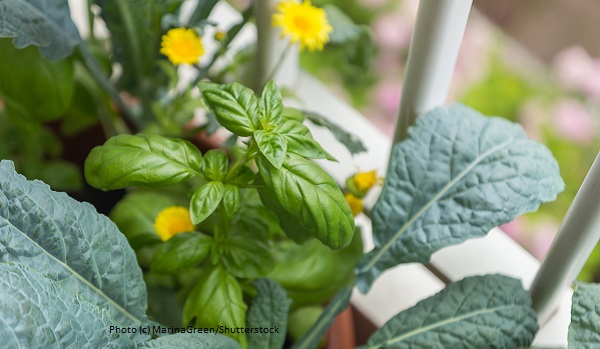
Modern gardeners are rediscovering the art of companion planting – an old-fashioned method of combining species that work together to help each other thrive.
My childhood friend’s grandmother had what some thought was a messy garden. Rather than planting rows and rows devoted to tomatoes, then more rows of carrots, she intermingled various species. She also tucked small plants here and there at the feet of taller ones. And – to the particular disdain of my mother – mixed vegetables and flowers in the same garden.
At the time, I thought her garden was beautiful, with all the mixed textures, colors, and sizes of plants. And I now realize that it also must have been highly productive, despite her refusal to use chemicals in her organic garden. The method behind her intermingling madness is called “companion planting.” And that simply means organizing the garden so that plants that benefit each other’s growth are placed in close proximity to each other.
The first benefit is more to the gardener than the plants, and that is optimal use of space. My friend’s grandmother must have had a small garden, given the small size of inner city lots. But companion planting allowed her to make good use of all the available room, using the space in the shade of corn plants to grow lettuce, for instance.
The focus of companion planting is that many plants have beneficial properties that can help other plants. By creating a balanced ecological system in your garden, you work with Nature to ensure that all the plants thrive, not competing for light or nutrients, and fending off pests and diseases.
This happens in a variety of ways. Sometimes, a plant is attractive to insects and, when planted beside the main crop, will protect it by luring the insects away. This is called “trap cropping.” A good example of this is when collards are planted to protect cabbages from moths. Likewise, nasturtiums are useful as a vegetable garden trap plant for aphids.
Other companion plants assist by attracting beneficial insects, including pollinators, to the food crops. Others, like many herbs, are useful in repelling insect pests. And therein lies the reason why my friend’s grandmother grew garlic among her rosebushes and raspberries. Garlic repels aphids, spider mites, fruit tree borers, and even Japanese beetles. Mint is useful against ants and white cabbage moth; rosemary deters carrot flies and bean beetles; and horseradish helps against potato bugs.
Insects attracted by certain plants can also be beneficial to both them and their companion plants. As well as fending off harsh environments, diseases, and pests, plants need to be pollinated to ensure their survival. Visiting insects do just that.
Some plants exude chemicals that suppress or repel pests and protect neighboring plants. The African marigold, for example, releases thiopene – a nematode repellent – making it a good companion for a number of garden crops. Rye can be used as a mulch around tomatoes and broccoli because it leaches a chemical that prevents weed germination.
Legumes like peas, beans, and cloves have the ability to fix atmospheric nitrogen for their own use and for the benefit of neighboring plants via the Rhizobium bacteria. Hence, the indigenous practice of interplanting beans with corn.
Plants can create beneficial habitats for each other. For example, tall-growing, sun-loving plants can share space with lower-growing, shade-tolerant species, resulting in higher yields. This style of planting can have other benefits too. The canopy resulting when corn is companion-planted with squash or pumpkins – another indigenous practice – is believed to prevent damage by the adult squash vine borer. And the prickly squash vines discourage raccoons from eating the corn.
When dense plants protect vulnerable species by shading or by creating a windbreak, this is called “nurse cropping.” Nurse crops such as oats have long been used to help establish alfalfa by smothering the more competitive weeds.
Companion planting has been used throughout the centuries, with some sources suggesting that it was the early Greeks and Romans who first recognized that certain plants could encourage or inhibit the growth of others. Gardening journals and word-of-mouth through generations of farmers and gardeners kept the knowledge of companion planting alive. Today, there is a wealth of information about companion planting available at your fingertips via a simple web search.
Although my friend’s grandmother’s companion planting methods were probably scoffed at more often than praised, scientists have more recently begun to verify the folklore and further the understanding of why plants enjoy the company of certain other species.
Wendy Priesnitz is the Editor of Natural Life Magazine and a journalist with over forty years of experience. She has also authored thirteen books. Photo (c) Shutterstock Images
|