Trash Talk
Twenty-six Ways to Save Time, Money and the Environment
by Refusing, Reducing and Reusing
by Dave and Lillian Brummet
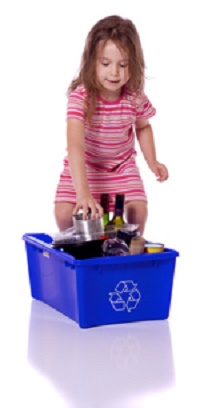 Zero waste is not just about recycling and the 3-Rs. It embraces waste as a resource that creates jobs and new products. Increasingly, more North American cities are taking on the Zero Waste initiative. Many of these efforts are focused on composting, worm bins and promoting recycling by having more depots available and providing residential blue-box services. Zero waste is not just about recycling and the 3-Rs. It embraces waste as a resource that creates jobs and new products. Increasingly, more North American cities are taking on the Zero Waste initiative. Many of these efforts are focused on composting, worm bins and promoting recycling by having more depots available and providing residential blue-box services.
The 3-Rs of recycling (Reduce, Reuse and Recycle) are often mentioned, but the order in which they are implemented is not often discussed. For instance, even before recycling, a plastic peanut butter container can be reused for various storage means – numerous times, possibly indefinitely. There is another, rather unknown fourth “R” to consider: Refuse to buy the brand that has a container that cannot be reused or recycled, or that has unnecessary packaging.
In the case of the peanut butter container, it not only serves as a (otherwise costly) storage container, it also stays out of the recycling loop, saving more time and resources that would have gone into reprocessing the plastic. Eventually it might get broken and end up being recycled anyway, but in the meantime, the accumulated savings and benefits are undeniable.
Trash Talk – the title of both our book and this article – is about implementing the Refuse, Reduce, Reuse tactics first – in that order –before even considering recycling, which is an excellent but costly industry. We encourage the raising of our collective voices to let the appropriate politicians know we want our money re-routed towards Zero Waste. More importantly, we need to start right where we are – at home. By taking matters into our own hands, we can reduce our own household costs, ease the burden that is upon the recycling industry and preserve our resources.
Refuse
1. Recognizing the power of the consumer’s voice is the first step to restructuring your shopping habits. When purchasing, avoid disposable over packaged or individually packaged products, especially those that contain polystyrene foam. Reconsider when purchasing products made from virgin materials as opposed to recycled. You are sending a powerful message to manufacturers when their sales figures decrease.
2. Refusal to accept manufacturers’ standards is very important. Consider the automobile industry that has slowly released green energy (hydrogen fuel cell, solar or electric power) and hybrid cars (gas/electric) to their production lines in the last few years. The trend has really bloomed and we can expect to see many more improved variations available in the near future. You, the consumer, helped accomplish that.
3. Ensure that you are heard by writing your concerns or ideas to the editors of various publications, to governments and to manufacturers. Let the powers that be know you want reduced packaging that is designed for recycling. Ask for clean energy policies that lean toward reducing pollution. Remember, what all it boils down to is this: They work for you.
4. Purchasing Eco-certified products and bulk amounts are other sound environmental choices. Did you know that the average grocery store fruit or vegetable travels 800 miles before you purchase it? Frequenting local organic farms helps reduce this avoidable use of energy.
5. Keeping an eye on the second hand stores can actually make good “cents”. Older tools are often of higher quality than many newer ones now available in stores, so it is worth attaching a new handle to an old head. Bargain prices on nearly new clothes can be found at second hand clothing stores, many of which donate their proceeds to a worthy cause. Refusing to buy cheaper items that are not durable to the test of time will ultimately extend your shopping dollar and the life of the landfill.
Reduce
6. Start by reducing the amount of waste packaging that comes with consumer goods. Choosing to buy large sizes of concentrated products is one way. By purchasing rolls of photo film in 36 rather than 12 exposures, you will reduce packaging alone by 66 percent (or use a digital camera!).
7. Strive to find goods that come in sturdy reusable containers. By buying in bulk, you avoid any packaging other than the occasional plastic bag, which is reusable (or take your own container, where permitted). All of these actions convince manufacturers to meet the consumer demands. They seem to hear money quite clearly!
8. Reducing the waste that is destined for the landfill begins simply by asking a few questions before discarding an item and purchasing another. Can I donate this or reuse it in any way? Can it be repaired, recycled or composted?
Reuse
Trash Talk is essentially about reusing items formally destined for the landfill or recycling depot. We hope to provide encouragement by showing you the direct effect these actions will bring. Here are some of our favorite assorted reuse ideas for some common items. The only limits are your imagination and creativity.
9. Baling Twine
Most especially on farms, baling twine can be found strewn in fields, along fencing, in the garden, tucked into nooks and crannies, wrapped up on sticks or just balled up together. Taking the time to cut each loop into a length and tying each length end-to-end is a great sitting-on-the-porch-in-the-shade job. Once you have a good length of rope formed, wrap it around a stake or stick. In no time you will have a good collection started. It can be used to construct pea and bean trellis-type fencing and in place of rope anywhere, except where a lot of strength or beauty is desired. Once the climbing beans cover up the string, visibility is no longer an issue.
10. Belts and Watch Bands
Belts work well as strong straps to support young trees, being that they are strong enough to support and yet soft enough not to cut into the bark. Cut into desired lengths to glue under items like desks, dressers, tables or anything that may scratch the floor surface. Cut to the desired size, a belt can make a good pet collar. Leather watch bands can be reused as cupboard door mufflers. Simply cut into small pieces and glue to the inside corners of the cupboard, muffling the sound of banging doors. With watches being very low priced, it can be tempting to simply throw them in the trash and consume another one. Before opting for the wastebasket, consider replacing your battery or buying a new band.
11. Caps and Corks
Painted bottle caps can replace missing board game pieces – or used as a tiny mixing bowl in the shop for glue or paint. Corks can be used as a key chain float or as fishhook covers in the tackle box. Construct a corkboard by gluing corks onto a section of plywood. And don’t forget that corks will compost over time.
12. Computer and Audio Disks
Reuse damaged or junk mail CDs as reflectors for vehicles traveling at night. Simply nail them, shiny side out, on fence posts and mailboxes or wire them to gates. Our good friend Brian reuses CDs as coasters. Backpackers can use them as emergency signaling mirrors. And they can be hung in the garden to keep birds from eating the fruit.
13. Construction Materials
If you can’t reuse your own construction trash from a home reno job, landfills are increasingly accepting asphalt, asphalt shingles, bricks, concrete and re-bar for reusing or recycling. And in some places, businesses exist that will purchase and resell used construction materials.
14. Coolers
Keep groceries cool during transport in summer months by storing an old cooler in your vehicle. They can be donated to youth groups that do outdoor activities. The lids make excellent outdoor picnic trays. Many cooler lids have convenient drink holders on the under side. Use to store toys, beach or pool ware, or as an activity box with art and craft supplies. In the yard, they can be used as a mini pond, a birdbath or water basin for thirsty pets. For container gardening on the patio or for storing garden harvests in the cold room, a cooler is a good strong device too valuable to discard.
15. Cups
Because paper cups are not recyclable, every time we use one, we contribute to the growing landfill problems. When coated in wax, these little conveniences do not decompose easily. Styrofoam™ is worse; the process of manufacturing Styrofoam or polystyrene is particularly damaging to the environment and it is a difficult substance to recycle. It is easy to refuse to use disposable cups by carrying a travel mug with you and taking a reusable coffee cup to work. If all else fails, both paper and foam cups can be used as transplant pots in your garden. Ceramics are not yet recyclable, but abused cups still have some use in them. Old cracked or stained mugs make beautiful pots for small houseplants and transplants. And many an office has one on the desk as a pen or pencil holder.
16. Curtains
Before discarding, consider donating window curtains to thrift shops, second hand stores or shelters, or sell them yourself at a garage sale. If they are too tattered and worn to be of value, there is still reuse potential in them. Utilize as a drop cloth around the shop, under a child’s kitchen chair or wherever crafts and painting take place. Reuse light-colored, sheer nylon or polyester window curtains as row covers in your garden. Line the trunk of your car to protect the carpet from a dirty cargo. Use old, clean shower curtains like a smock to protect clothes when painting or during other messy art projects. Cut into large rectangles and secure them to the shoulder seams of the kids’ shirts with clothespins. A shower curtain under the tent will protect the floor in wet weather. Extend the life of the shower curtain by using a hole-punch to create new holes for the rings to go through.
17. Ironing Boards
Old ironing boards make excellent potting benches and are often found at garage sales. They are just narrow enough to fit nicely in most greenhouses. They will fold up and store away when not in use, and the holes in the ironing board provide ample drainage for transplants. When we have a lot of plants hardening off, this bench can be placed anywhere convenient.
18. Light Bulbs
Light bulbs work well when repairing tears in clothing, especially socks. The bulb’s shape is perfect for forming the tear to the body’s form, and because it is glass, the needle is easier to control. Those who are crafty, tell us light bulbs are as commonly used as molds in paper-mache.
19. Plastic Eggs Packaging
Children’s toys and gifts often come packaged in an assortment of plastic containers, which are most commonly egg-shaped. Filled with aquarium gravel or rice, these make a good sounding musical shaker. Dave (who is a percussionist) has made several of these over the years and uses them both live and in the recording studio. The larger eggs from pantyhose work well for packaging small gifts. These look really nice when permanently decorated. Lillian once had a very large egg with an Easter bunny design glued onto its outer surface. It was so nice, we used it in an Easter supper table display. The following year it was filled with chocolates and given to a child as a gift.
20. Pots and Pans
Pots and pans, dishes and most other kitchenware can be donated to charities and thrift stores or sold at garage sales. They can be reused as toys in children’s sandboxes or for playing at the beach. Camping results in far too many bumps and bruises for good kitchen equipment to be taken out. Many campers reuse older pots because it does not matter if the bottom is burned from the open flames of a campfire. Consider replacing any broken handles with those from a second-hand pot to extend the life of an otherwise perfectly good utensil.
21. Shakers
Reuse plastic herb, spice or Parmesan cheese shakers in the kitchen by either buying in bulk and refilling them or filling them with dried herbs from your garden. They can also be utilized in the garden by filling with soil amendments like kelp meal or rock phosphate. Use to sow crops like grass, clover, carrots and parsnips, which are commonly planted fairly thickly.
22. Swing Sets
Often found for free or very cheap at garage sales, old swing sets can have their lives extended as greenhouses. Remove the swings and cover the frame with six-mil clear plastic. Use cut coat hanger pieces to pin down the outer edges, then cover the entire edge with dirt for added security. For extra insulation, pile leaves or hay on the edges in the fall. One creative fellow used duct tape to attach a zippered door from the recycled family tent for the entrance.
23. Umbrella
Hang the stripped umbrella skeleton upside down from the showerhead and use as a foldable drying rack for clothes.
24. Telephone Wire
Multi-colored strands work well for arts and crafts or easy plant identification in the greenhouse. Use to tie tomatoes or other climbing plants onto their support systems.
25. Three-Ring Binders
Cut out the ring section. Open the rings and cut the upper half of the rings off – using bolt cutters or a hack saw. Drill holes in the flat surface so that you can hang, nail or screw the panel to a wall. The hooks can be used to hang keys, hats or coats.
26. Toys
One technique parents can try is to exchange toys with friends and family rather than buying more new ones. This will ease the cost for the parents, while providing variety for the children. Another approach is putting half of the toys in storage then switching them when the children begin to show signs of boredom with their present playthings. Garage sales are popular ways of buying and selling used toys. Donating toys to a daycare, hospital or doctor’s office is a very good option as well. Whether you are donating or selling the toys, try to repair the broken ones as well. A number of years ago, we met an older couple who bought used toys, bringing them home to their workshop to repair and repaint before giving them to poor and needy children. A modern day Santa’s workshop! When you are purchasing new toys as gifts, parents recommend keeping the quality of the toy in mind; the longer the toy lasts, the longer it will be enjoyed.
There is Hope
As a final note, we would like to point out that although it is a big task to change the thinking of such a mass of population, there is hope. The collective actions of many people are much more powerful than that of any one high-ranking politician. As the majority, we can force changes by making changes.
The authors have based the material in this article on their book Trash Talk, published in 2004 by PublishAmerica LlLP, www.publishamerica.com
|