Organic Fibers:
Dress Yourself and Your Home in Style with a Conscience
by Wendy Priesnitz
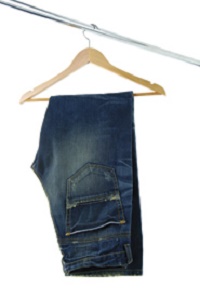 Although environmentally and health conscious consumers have traditionally favored natural fibers – primarily cotton – over synthetic clothing, cotton is one of the most environmentally unfriendly crops grown. But a new organic fiber industry that is rapidly developing across North America will help solve the problem of what to wear. Consumers now have their choice of a growing selection of clothing, bedding and other products made from organic cotton, wool, linen, hemp and flax. Although environmentally and health conscious consumers have traditionally favored natural fibers – primarily cotton – over synthetic clothing, cotton is one of the most environmentally unfriendly crops grown. But a new organic fiber industry that is rapidly developing across North America will help solve the problem of what to wear. Consumers now have their choice of a growing selection of clothing, bedding and other products made from organic cotton, wool, linen, hemp and flax.
“Apparel and home textile products made with organic fiber demonstrate a growing commitment by manufacturers to the environment and acknowledge the growing sector of environmentally conscious consumers,” says Katherine DiMatteo, executive director of the Organic Trade Association (OTA), which represents the organic industry in North America.
Wool
The organic wool industry is still tiny, but growing steadily, like its other organic fiber counterparts. It is attracting attention from companies that produce bedding material like futons, mattresses, comforters and even chairs. Most mass produced bedding contains synthetic fibers that are treated with petrochemicals, formaldehyde, bleach and chemical fire retardants. These chemicals are not healthy for anyone and can create adverse reactions in those who are particularly sensitive. The natural properties of wool make additives unnecessary, hence no harmful off-gassing.
Companies in the furniture and bedding market are taking advantage of the growing supply of organic wool. Some of them, like Maine Merino, make an effort to support not only sustainable agriculture, but also small, local, independent growers.
The OTA surveyed the organic wool industry in 2002, in collaboration with the National Center for Appropriate Technology’s Appropriate Technology Transfer in Rural Areas (ATTRA) program and the Vermont Organic Fiber Co. They found that 30,000 pounds of organic wool was harvested from approximately 2,300 sheep raised organically in the United States and Canada during the 2001 season.
Hemp
Hemp is another burgeoning natural fiber industry. Hemp, which can be grown without herbicides or pesticides, has been used for centuries in household linens and work clothes because its fibers are four to six times stronger than cotton. It is now making a comeback and the U.S. Department of Agriculture has recently started advocating the use of hemp clothing for all landscaping workers because of its natural hypoallergenic properties.
Cotton
Of all organic fibers, organic cotton appears to have caught on the fastest. Well-known international clothing manufacturers and small businesses alike are incorporating organic cotton into their apparel, with sales currently growing at close to 40 percent a year. In addition, organic cotton appears in a variety of personal hygiene products, home furnishings and more, an industry that expects its sales growth to average 67 percent a year.
As a result of increasing interest in organic cotton, it is estimated that over 12,000 acres of organic cotton are now grown in the U.S. In 2000/2001, approximately 6,000 metric tons (slightly more than 14 million pounds) of organic cotton were grown in 12 countries, according to the Pesticide Action Network of the United Kingdom. However large these numbers may seem, they represent just 0.03 percent of worldwide cotton production. Internationally, Turkey and the United States are the largest organic cotton producers.
Other Fibers
New innovations blend organic cotton with the silky fibers of the soybean plant, and use environmentally friendly processed bamboo fiber.
As the organic fiber market matures, producers are turning their attention to the manufacturing process, ensuring that workers have fair wages and healthy working conditions, often through an affiliation with fair trade organizations.
Organic apparel and household items are a natural choice for those who want to support sustainable environmental practices and preserve the planet’s fragile ecosystems with choices beyond the foods they eat. And the designs available today prove that consumers need not compromise their values for style.
Wendy Priesnitz is the Editor of Natural Life Magazine and a journalist with over 40 years of experience. She has also authored 13 books.
|