Luring Beneficial Insects to Your Garden
By Wendy Priesnitz
Create a garden that is friendly to beneficial insects
and let Nature control the pests that eat your cabbages and roses.
Worried that miniature monsters like aphids, hornworms or corn borers will chomp a swath through your carefully planted garden this year? These insect pests can be the organic gardener’s worst enemy. But not all insects are harmful. In fact, so-called beneficial insects can help you fight the nasty ones. So nurture a balanced, biologically diverse environment in your garden and let nature help you with pest control.
The use of insects to suppress other insects dates back at least to the fourth century A.D. when ants were manipulated to control citrus pests in China. Aphids, worms and caterpillars, spider mites, thrips, greenhouse whiteflies, flies, mealybugs, sweet potato whiteflies, mosquitoes, fire ants, grasshoppers and broadmites can all be controlled in this manner.
There are basically two categories of insects used to control other insects – predators and parasites. Insect predators like the praying mantis and ladybug feed directly on their prey, killing them immediately. They are generally larger than their prey and must eats lots of prey to grow. Other, smaller and weaker, insects like wasps and flies parasitize their hosts by depositing eggs on or in them, eventually killing them by using the host for food.
There are two ways to get beneficial insects into your garden. You can lure them there naturally or you can introduce purchased ones. If you are unable to attract beneficial insects into your yard, or you are dealing with a specific pest or you are gardening in an enclosed area such as a greenhouse, purchasing and releasing some beneficial insects may be the best plan. Suppliers ship by mail and can recommend specific solutions that are beyond the broad scope of this article.
Otherwise, make sure your garden is friendly to beneficial insects. Insects need water and shelter. A birdbath or simple dish or pan filled with pebbles so the insects won’t drown will provide drinking water for a variety of insects. Change the water in containers every few days to discourage mosquitoes from breeding in the standing water. Provide areas of stable habitat, some rocks and grass pathways, and leave some leaf litter and debris under shrubs to provide beneficial insects with a place to hide on hot summer days and protection from mowing, tilling and other disturbances.
Do not use zapper lights that electrocute insects because they may kill more beneficial insects than pests. Like pests, beneficial insects need food. So grow a variety of plants to support a variety of insects. As a general rule, beneficial insects like tiny flowers that offer both pollen and nectar. And since the appetites of friendly insects may peak before your garden does, try to have an early bloomer ready so the beneficial insects can feed on nectar and pollen.
Small flowering plants provide the best source of nectar for hungry beneficial insects. These include many herbs, particularly umbelliferous flowering types as the floral heads are actually many small flowers held together. A few of the best herbs include dill, coriander, sweet fennel, caraway, lovage, angelica, parsley, tansy and mint. Sweet alyssum is also good, as are daisies. Probably the best plant to have growing in your own garden or in the neighborhood is Queen Anne’s lace. The flat white umbelliferous flowers are the favorite food of a predator wasp which feeds on many of the harmful insects, including Japanese beetle grubs.
Another group of plants that provide valuable food for beneficial insects are the flowers of garden vegetables, such as the floral heads of broccoli, lettuce and numerous other cool crops. So if you want to attract beneficial insects, leave a few plants to fully bolt and produce flowers for early summer beneficial insects.
As for which bugs are helpful, here are some of the main ones you should consider attracting or acquiring.
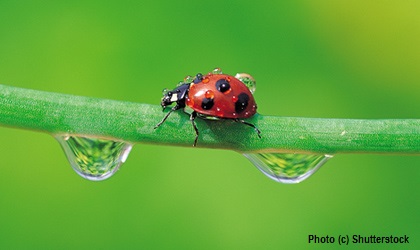
- Many species of ladybird beetle have an enormous appetite for aphids, mealybugs and mites. Ladybug larvae are equally relentless predators. Attract ladybugs to your garden by planting pollen-rich plants like angelica, dill, lemon balm, caraway and catnip.
- Lightning bugs (Lampyrids) and Soldier Beetles (Cantharidae) are excellent predators of soft bodied insects like aphids. Soldier beetles especially like pollen from goldenrod, yarrow, Queen Anne’s lace and other fall flowers.
- When praying mantis are small, they are excellent soft-bodied insect predators. But as they get bigger, they begin to eat anything that passes in front of them including other beneficial insects, like honeybees.
- Aphids, small caterpillars and other soft-bodied insects can be caught quite effectively by the larvae of common lacewings (C. carnea and C. rufilabris), which look like miniature monsters when viewed under magnification.
- The lowly ground beetle (Carabidae) , so common under logs and debris, is another good friend of gardeners. Both larvae and adults are predaceous and feed on a wide variety of insects.
- Parasitic flies (Tachnidae), which are commonly found in houses during early spring, lay eggs on caterpillars and adult beetles. These large, hairy flies are recognizable because their wings protrude at a 45-degree angle.
- Trichogramma wasps (minutum and pretiosum) are tiny but useful parasites, especially for caterpillar control. Some popular hosts include the eggs of the: gypsy moth, codling moth, tomato hornworm, cabbage looper, imported cabbage worm and European corn borer.
Attracting these friendly bugs to your garden will not totally alleviate infestations, but should remove enough pests to keep your plants thriving.
Resources
The Gardeners Bug Book: Earth-Safe Insect Control by Barbara Pleasant (Storey Books, 1994)
Insects and Gardens: In Pursuit of a Garden Ecology by Eric Grissell (Timber Press, 2001)
Good Bugs for Your Garden by Alison Mia Starcher (Algonquin Books, 1995)
The Gardener’s Bug Book by Cynthia Westcott (Doubleday, 1973)
|